
American community cookbooks got their start during the Civil War, when women sold recipe collections to help care for Union soldiers. I had no idea a cookbook could double as a fundraiser that early.
The idea caught on fast. Churches, schools, and women's groups began printing their own spiral-bound collections, and many still do today.
Flip through almost any of them and you will spot a pattern. Casseroles fill page after page, because one pan can feed a long table, travel across town, and stretch a few pantry items into a real meal.
The dishes below show up again and again in those books and at shared suppers. Some came from company test kitchens, and some grew out of regional traditions.
All of them have one thing in common: somebody always wants the recipe before the pan is empty.
Green Bean Casserole Topped With Crispy Fried Onions
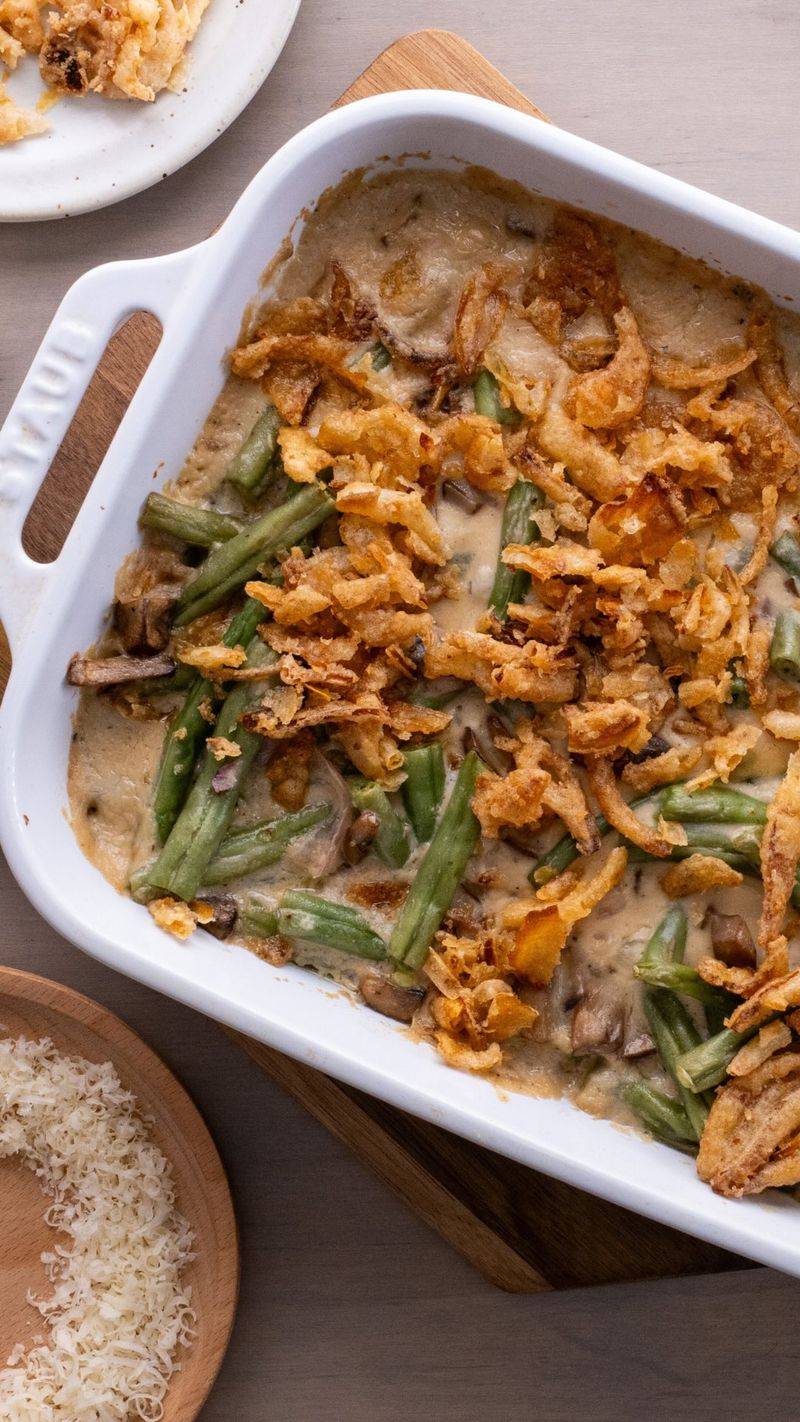
One test-kitchen employee in New Jersey gave America its most famous side dish, and she did it with ingredients most cooks already had. Dorcas Reilly created the recipe at Campbell's in 1955, and it was first called Green Bean Bake.
Her assignment was simple: build something quick using green beans and condensed cream of mushroom soup. The result had just a handful of ingredients, which is a big reason it spread so fast through community cookbooks.
Here is the basic lineup from the company recipe. You will need cooked cut green beans, cream of mushroom soup, milk, a splash of soy sauce, black pepper, and crispy fried onions.
Everything mixes right in a 1.5-quart casserole dish. Bake it uncovered at 350 degrees F for about 25 minutes, then stir and add the rest of the onions.
Five more minutes in the oven turns that topping golden and crunchy. For a potluck, I like keeping the onions in a separate bag until you arrive, so they stay crisp.
Modern cooks often swap in fresh beans or homemade mushroom sauce. Those are variations, though, and the canned-soup original is still the one many people request by name.
Tater Tot Hotdish Lines Up Crispy Tots Over Beef and Cream Soup

Say casserole in parts of Minnesota and North Dakota, and someone may politely correct you. Up there, this kind of baked one-dish meal is called hotdish, and the name pops up all over church and community cookbooks.
Tater tots themselves only arrived in 1956, when Ore-Ida introduced them. That means this beloved hotdish is younger than many people guess, gaining fans in the decades that followed.
The base is wonderfully plain. Brown about a pound of ground beef with chopped onion, then stir in cream of mushroom soup and a can of drained green beans or corn.
Spread that mixture in a greased 9x13-inch pan. Then cover the top with frozen tater tots, lined up in rows if you are feeling tidy.
Bake it uncovered at 350 degrees F until the filling bubbles and the tots turn brown, often 45 minutes to an hour. Neat rows are optional, but they do make cutting squares much easier.
Some families add shredded cheese under the tots, and others use cream of chicken soup instead. Both count as variations, and both still earn the name hotdish at a Midwest supper table.
Funeral Potatoes Bake Hash Browns Under a Cornflake Crust
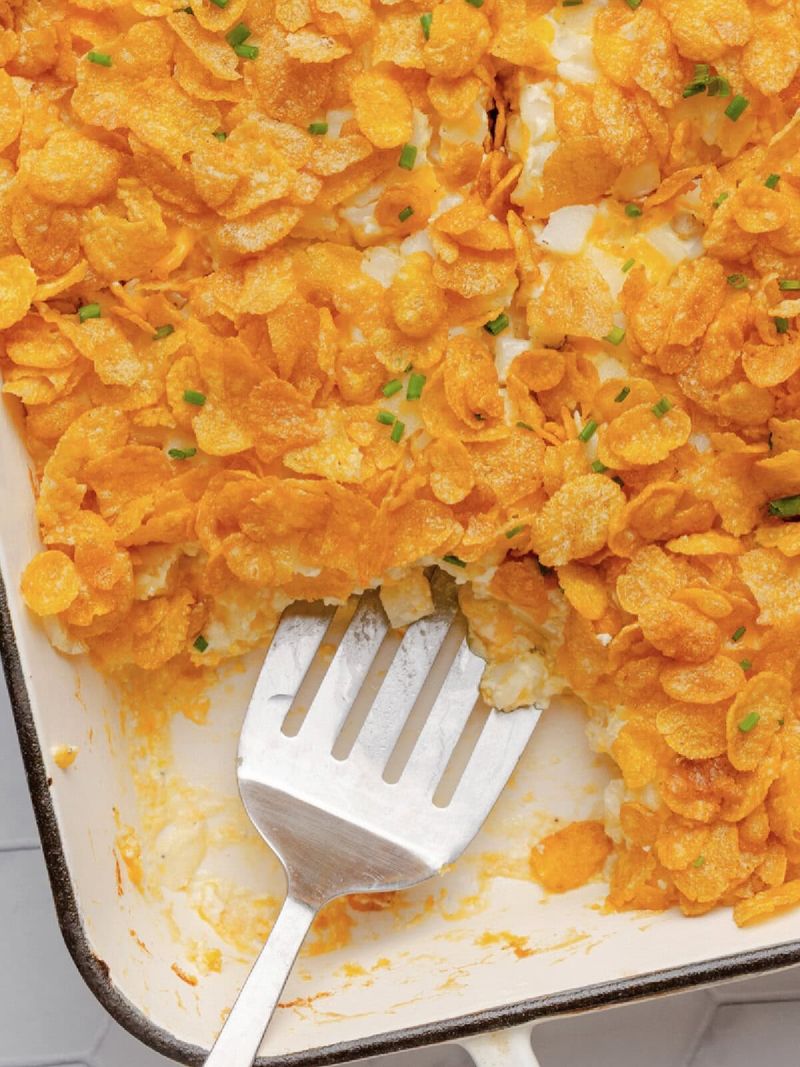
Few dishes carry a name this serious and a flavor this comforting. Funeral potatoes are strongly associated with Latter-day Saint communities in Utah and nearby states, where they often appear at luncheons served after funeral services.
Relief Society groups and community cookbooks helped spread the recipe. It became so linked to Utah that a funeral potatoes design even appeared on a souvenir pin for the 2002 Salt Lake City Winter Olympics.
The filling relies on frozen shredded hash browns. Mix them with sour cream, cream of chicken soup, melted butter, and plenty of shredded cheddar.
Spread everything in a greased 9x13-inch baking dish. The topping is crushed cornflakes tossed with melted butter, which bakes into a crackly golden layer.
Most recipes bake it uncovered at 350 degrees F for about 45 minutes to an hour. Look for bubbling edges and a toasty top before you pull it out.
Food safety matters when the meal runs long. Current USDA guidance says hot dishes should not sit at room temperature for more than two hours, so plan a warm oven or slow cooker for leftovers.
Overnight Sausage, Egg, and Cheese Breakfast Casserole With Bread Cubes
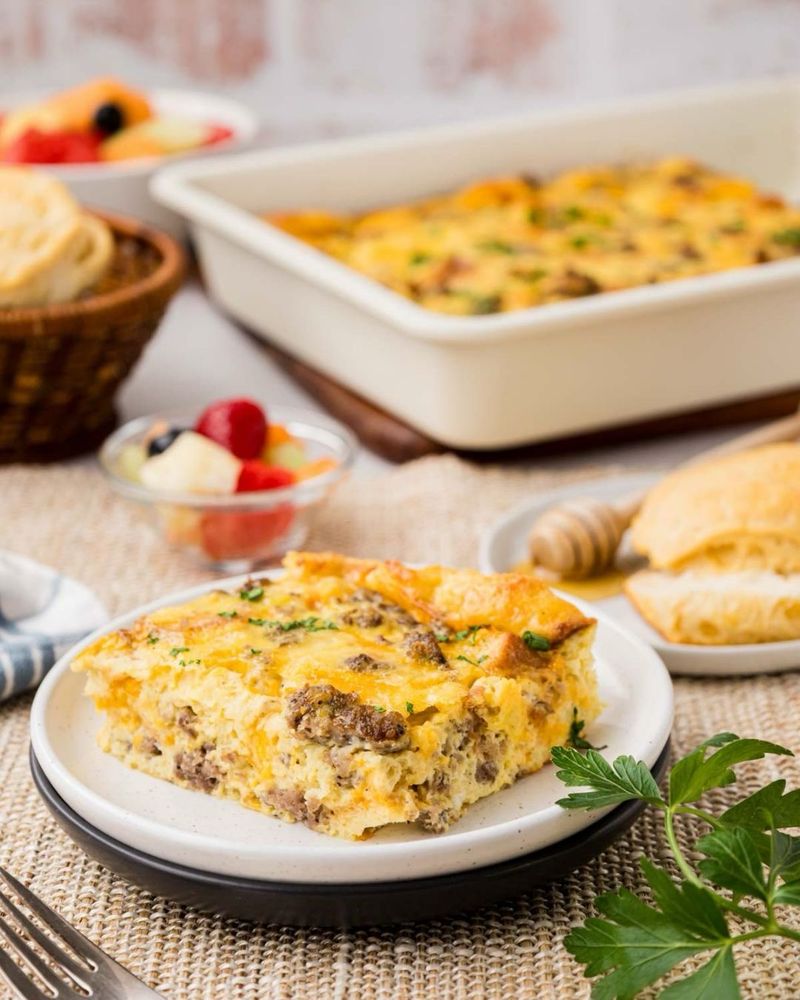
Your refrigerator does most of the work on this one while you sleep. The breakfast strata, built on bread, eggs, and cheese, became a go-to for early church breakfasts and holiday brunches because it is assembled the night before.
That make-ahead trick is the real star. By morning, the bread has soaked up the egg custard, so it bakes up soft inside and golden on top.
A typical recipe looks like this:
Key ingredients: cubed bread, cooked and crumbled breakfast sausage, shredded cheddar, eggs, milk, salt, and often a little dry mustard.
Layer the bread, sausage, and cheese in a greased 9x13-inch pan. Pour the whisked eggs and milk over the top, cover it, and chill overnight.
Bake it uncovered at 350 degrees F for roughly 45 minutes to an hour, until the center is set. A knife slid into the middle should come out clean.
Many cooks now swap the sausage for ham, bacon, or vegetables. Those changes are easy, but keep one rule: eggs and meat stay in the fridge until baking, which follows current USDA guidance on keeping cold foods cold.
Tuna Noodle Casserole With a Crunchy Potato Chip Topping
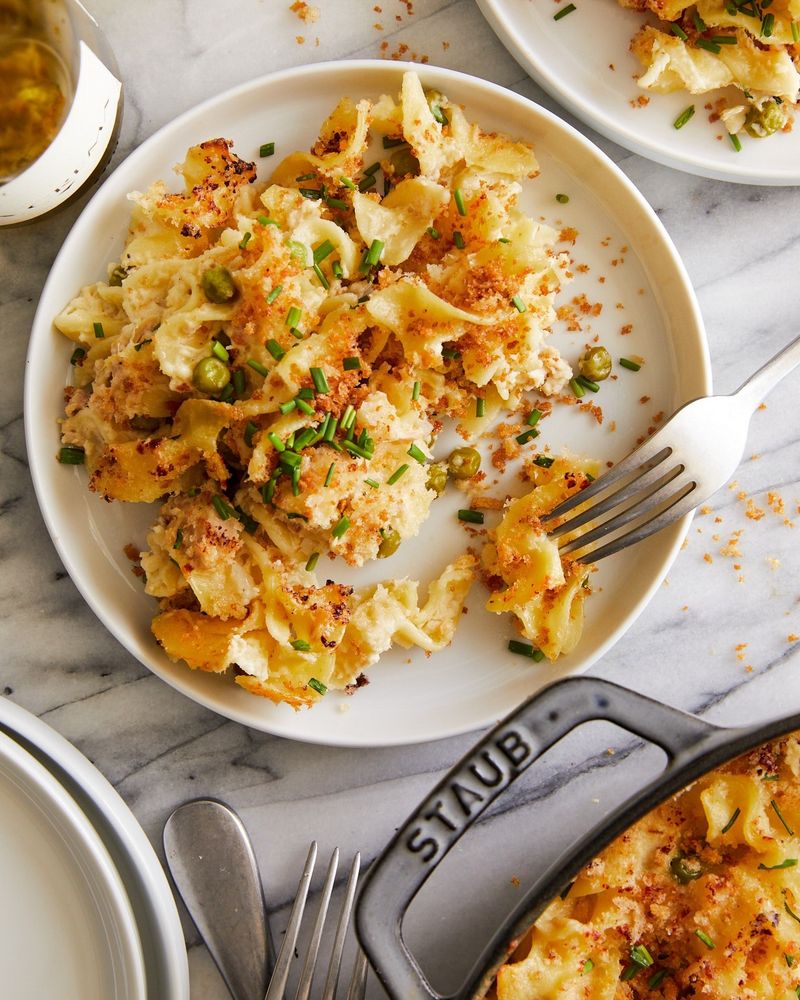
Canned tuna and egg noodles might not sound fancy, but together they fed a lot of hungry tables. Tuna noodle casserole grew popular in the mid-1900s, as canned tuna and condensed soups became easy to buy.
It made sense for budget-minded cooks. A couple of cans and a bag of noodles could stretch into dinner for a whole family, and church cookbooks printed versions for decades.
Campbell's still shares a version built on cream of mushroom soup. Mix the soup with milk, drained tuna, cooked egg noodles, and peas in a 1.5-quart casserole dish.
The crunch on top is where cooks get creative. Buttered breadcrumbs are common, but crushed potato chips have a loyal following.
Bake it at 400 degrees F for about 20 minutes, then add the topping and bake a few minutes more until golden. A short bake keeps the noodles from turning mushy.
If you are doubling it for a crowd, use a 9x13-inch pan and add a little time. Cook the noodles a bit firm, since they keep softening as the casserole sits in a warm car on the way to the dinner.
Corn Pudding Casserole Made With Corn Muffin Mix and Creamed Corn
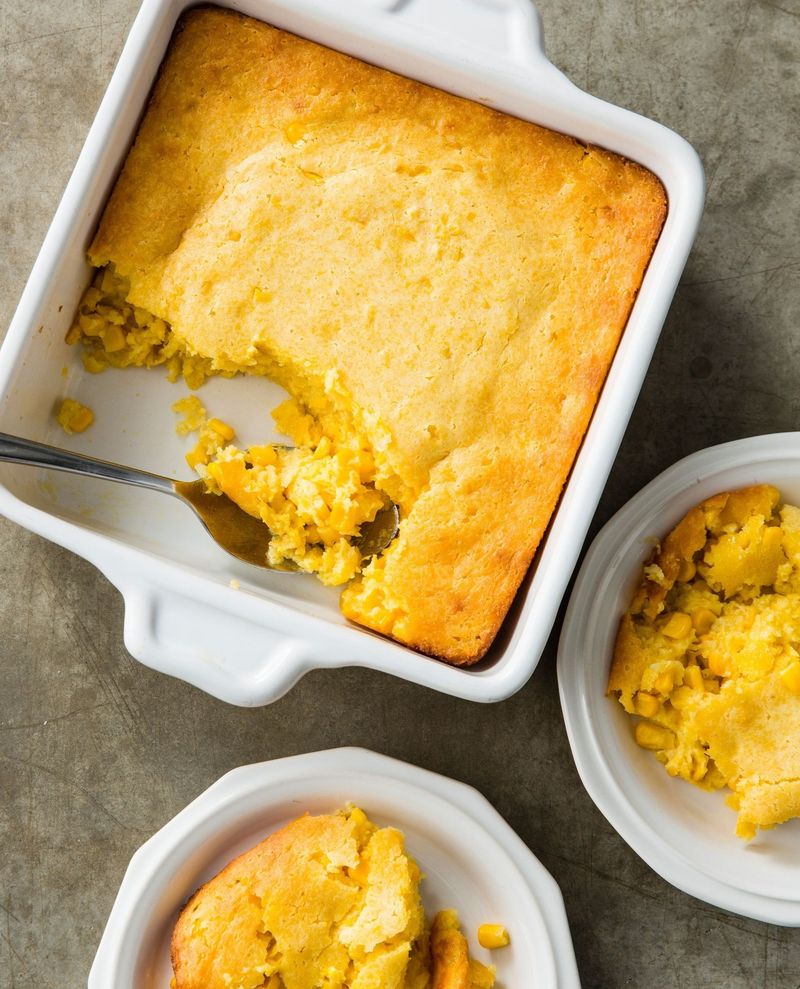
A small blue-and-white box of corn muffin mix turned an old Southern side into a five-minute stir job. Older corn puddings were custards of fresh corn, eggs, and milk, but the boxed-mix version took over many modern potluck tables.
Cooks sometimes call it corn casserole or spoon bread. The texture lands somewhere between cornbread and pudding, soft enough to scoop with a big spoon.
No mixer is needed here. Stir together corn muffin mix, a can of drained whole kernel corn, a can of creamed corn, sour cream, and melted butter.
Pour the batter into a greased 8x8-inch pan. Many recipes add one or two eggs for a firmer set, so follow the one you trust.
Bake it at 350 degrees F for about 45 to 50 minutes. The center should look set and the top should turn light golden.
Let it rest about 10 minutes before cutting. For a large gathering, double the recipe in a 9x13-inch dish and add some extra bake time, checking the middle with a toothpick.
Shredded cheddar or diced green chiles stirred in are popular variations.
King Ranch Chicken Casserole Layers Corn Tortillas, Chicken, and Cheese
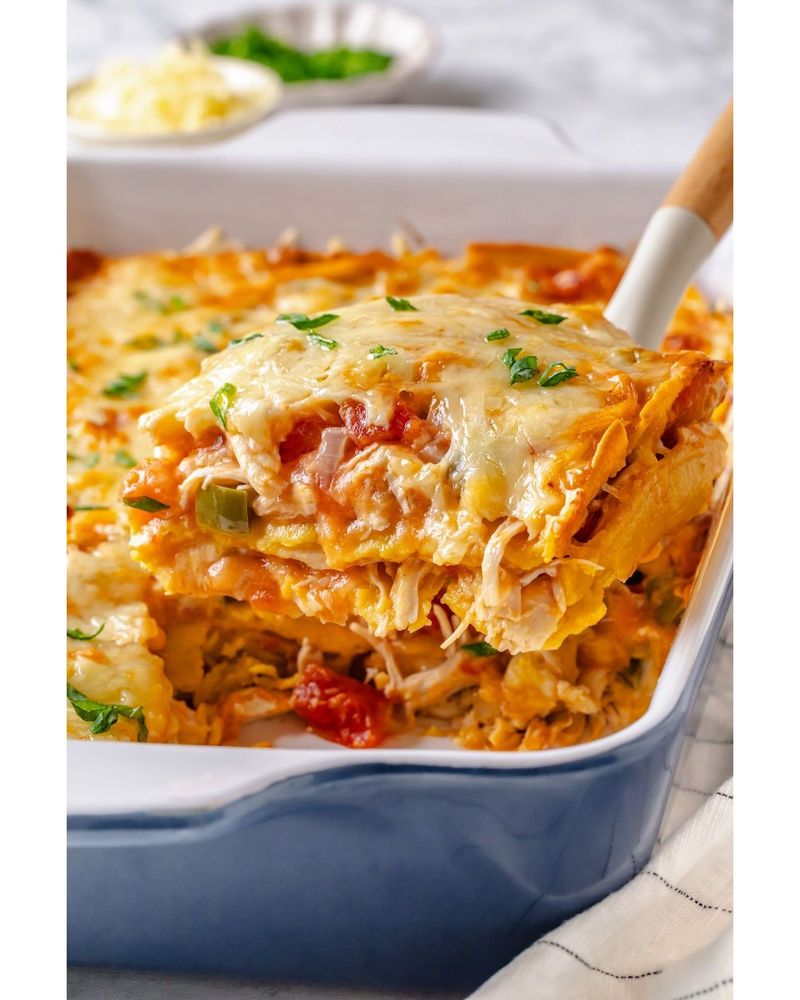
Texas named this casserole after a famous ranch, yet nobody has proven the ranch ever served it. The King Ranch says it did not create the dish, and its true origin remains unclear.
What is clear is how popular it became in Texas. It turns up in church cookbooks, at funeral meals, and in holiday spreads across the state, and Texas food writers still treat it as a local classic.
Think of it as a layered bake, almost like a Tex-Mex lasagna. Corn tortillas stand in for noodles, stacked with cooked chicken, a creamy sauce, and cheese.
Key ingredients: corn tortillas, cooked chicken, onion and bell pepper, cream of chicken and cream of mushroom soups, canned tomatoes with green chiles, chili powder, and cheddar.
Layer it all in a greased 9x13-inch dish. Bake at 350 degrees F for about 30 to 40 minutes, until the edges bubble and the cheese melts.
Some modern cooks skip canned soup and make a from-scratch sauce instead. Either way, assemble it ahead, then bake right before serving so the tortillas stay tender instead of soggy.
Broccoli Rice Casserole With Melted Cheddar
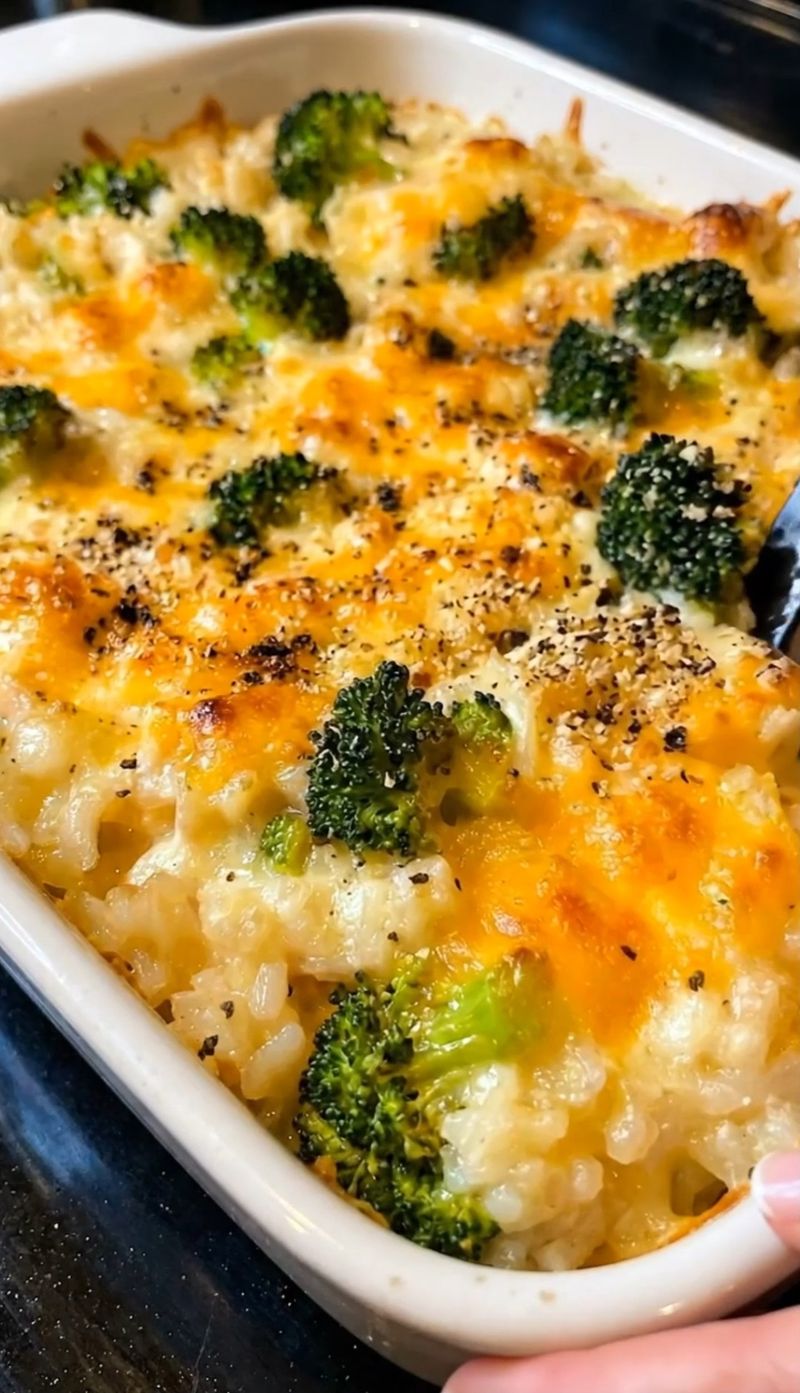
Frozen chopped broccoli made a quiet revolution in home kitchens. Once it became a freezer staple, broccoli rice casserole showed up in plenty of church and community cookbooks, especially across the South.
It solved a classic potluck puzzle. You get a vegetable, a starch, and a cheesy sauce in one dish that holds well on a buffet line.
Start by softening chopped onion, and often celery, in butter. Then combine it with cooked white rice, thawed chopped broccoli, cream of chicken or mushroom soup, and shredded cheddar.
Older recipes often called for processed cheese spread, which melts very smoothly. Many newer versions switch to sharp cheddar for more flavor.
Spread the mixture in a greased 9x13-inch dish. Bake at 350 degrees F for about 30 to 40 minutes, until it bubbles and the top melts.
A sprinkle of extra cheese or buttered breadcrumbs adds a nice finish. Day-old cooked rice works better than freshly cooked rice, because it holds its shape instead of turning gummy.
That small trick saves a lot of texture headaches, and it is a smart way to use leftovers from earlier in the week.
Baked Macaroni and Cheese With a Golden Cheddar Crust
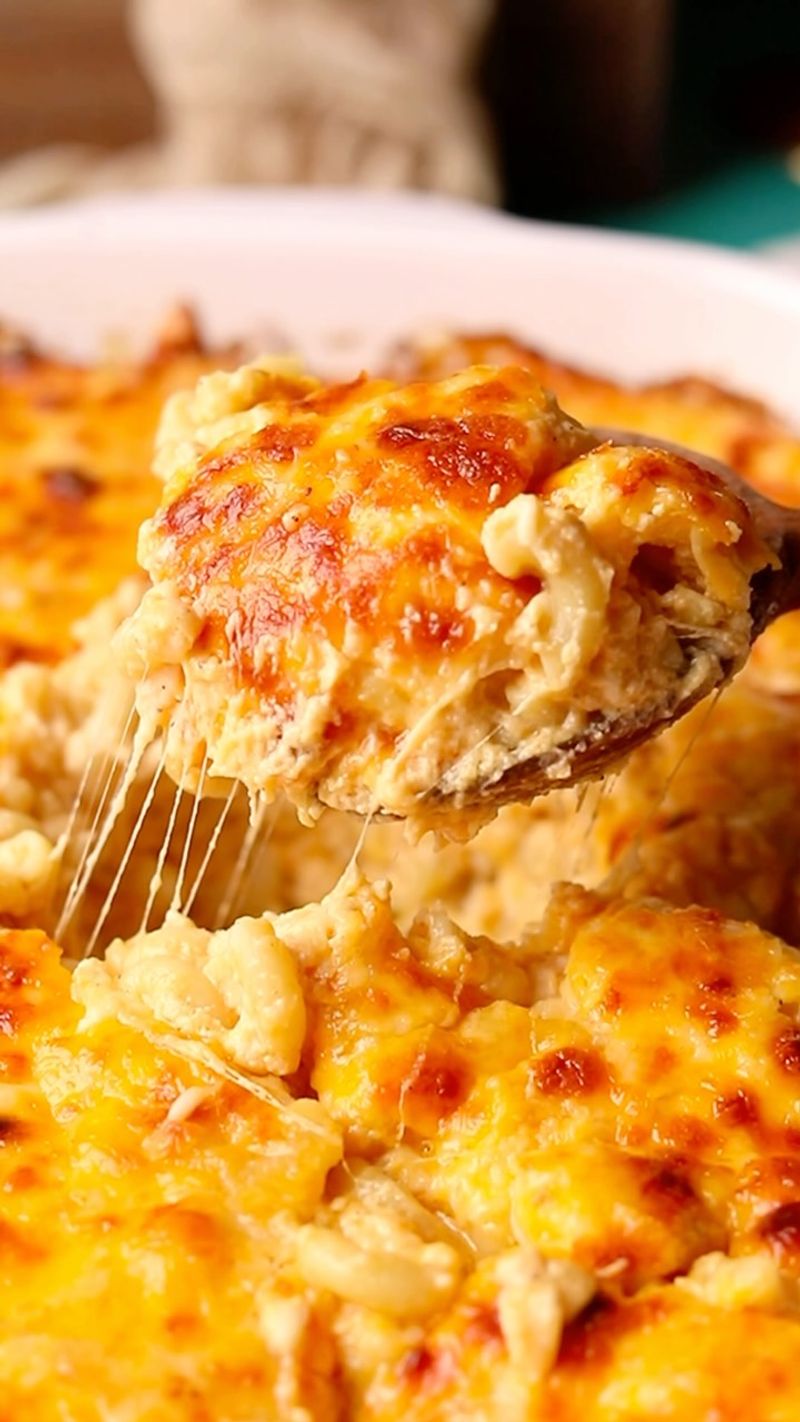
Long before boxed dinners, a Virginia cookbook was already telling cooks to bake macaroni with cheese. Mary Randolph included a recipe in The Virginia House-Wife in 1824, one of the early American examples.
Thomas Jefferson is often linked to macaroni too, since he had pasta brought back from Europe. Today baked mac and cheese remains a favorite at Southern church dinners and holiday tables.
A classic method begins with a white sauce. Melt butter, whisk in flour, then slowly add milk until the sauce thickens.
Stir in plenty of shredded sharp cheddar until it melts smooth. Fold in cooked elbow macaroni and spread it in a greased 9x13-inch dish.
Top with more cheese and bake at about 350 degrees F for 25 to 30 minutes. You want bubbling edges and a browned crust.
Some Southern cooks skip the flour sauce and use an egg custard instead, making it sliceable. Neither is more correct, so pick the style your crowd likes.
For travel, slightly undercook the pasta, since it keeps absorbing sauce. A heavy towel wrapped around the dish also helps keep it hot on the drive.
Chicken Spaghetti Bakes Pasta, Chicken, and Tomatoes With Green Chiles
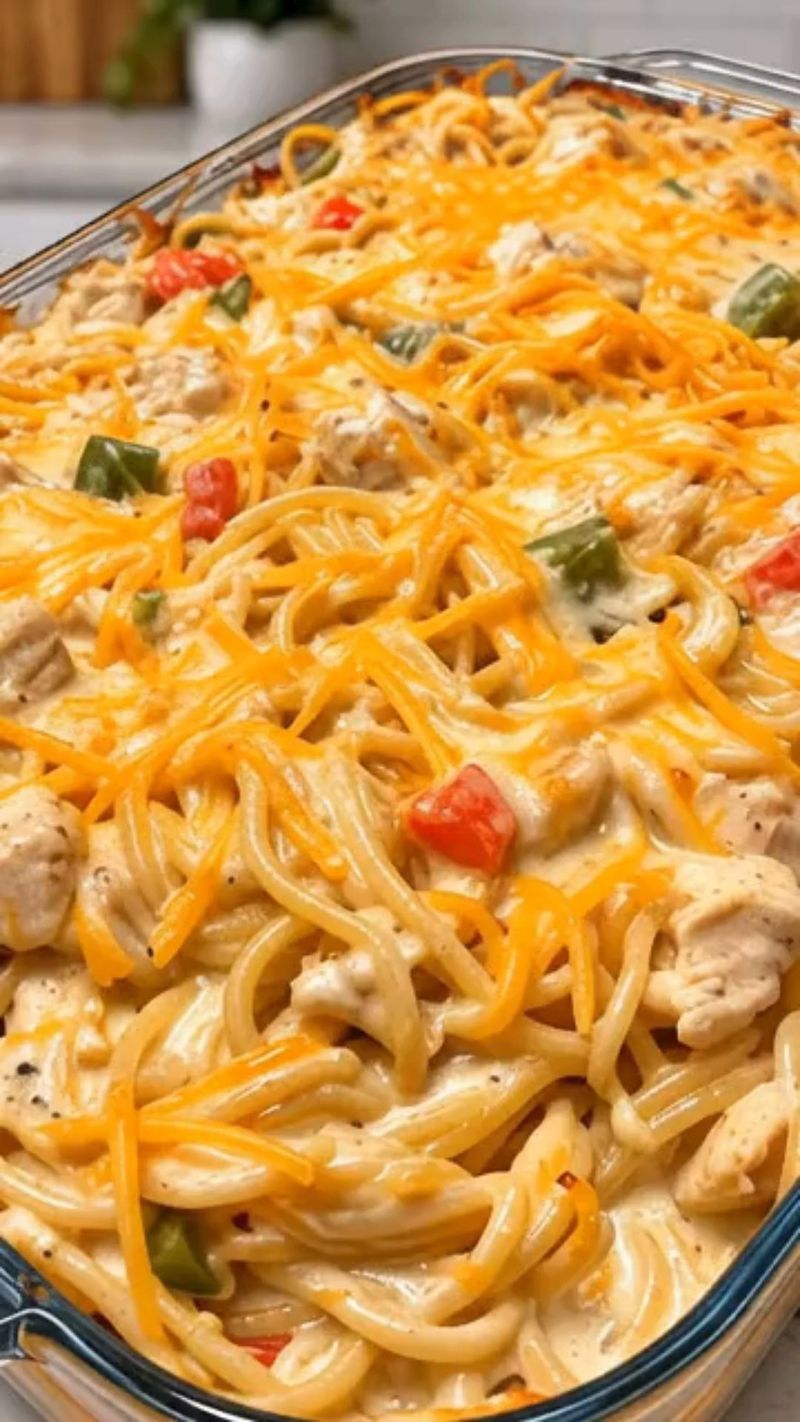
Spaghetti in a casserole sounds unusual until you taste it, and then it makes perfect sense. Chicken spaghetti is a longtime favorite in Texas and across the South, appearing in church cookbooks and at meals for grieving families.
It is a smart way to use a whole cooked chicken. The pasta and creamy sauce stretch the meat to feed many more people.
Here is a common lineup:
Key ingredients: cooked spaghetti, shredded cooked chicken, cream of chicken and cream of mushroom soups, canned diced tomatoes with green chiles, onion, bell pepper, and cheese.
Many older recipes use processed cheese for a silky sauce, while others call for cheddar. Mix everything together, then spread it in a greased 9x13-inch pan.
Bake at 350 degrees F for about 30 to 45 minutes, until hot and bubbly. A layer of cheese on top browns nicely in the last few minutes.
Try breaking the spaghetti in half before cooking so it is easier to serve. It also freezes well before baking, which makes it a handy dish to drop off for a family that needs a meal later in the week.
Poppy Seed Chicken Casserole Under a Buttery Cracker Crust
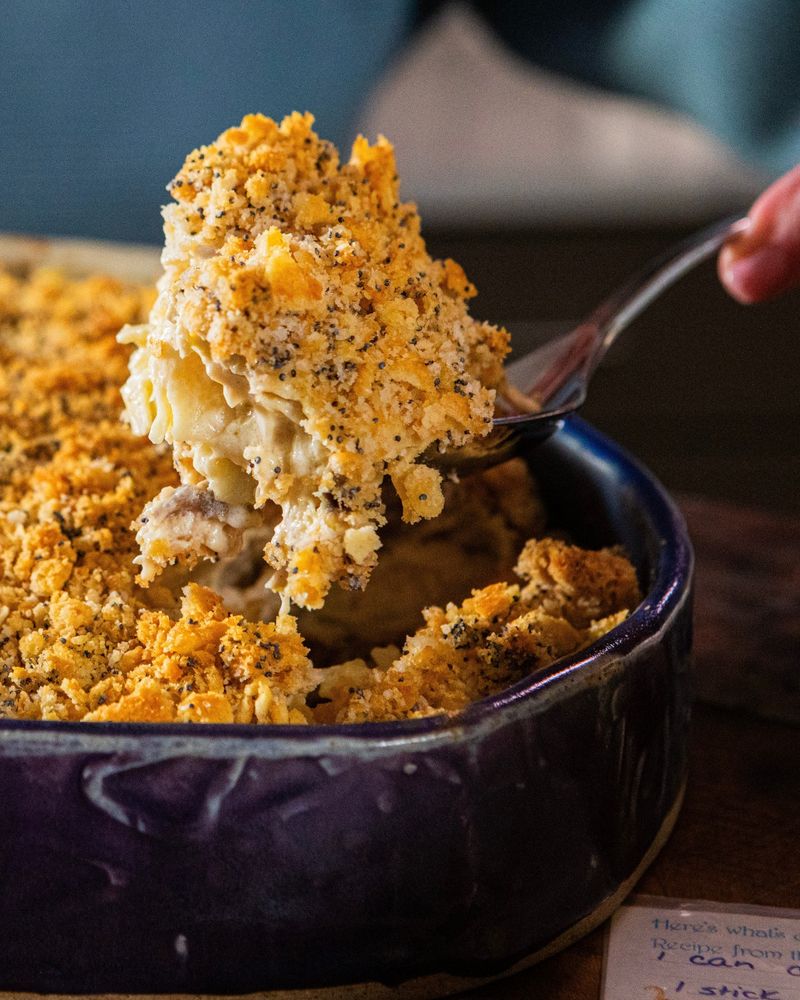
Tiny black seeds give this Southern casserole its name and its speckled look. Poppy seed chicken is a familiar sight at church suppers, showers, and meals brought to families after a loss in many Southern towns.
Its appeal comes from how little work it takes. Cooked chicken, a creamy sauce, and a cracker topping are all you need.
Shred cooked chicken, often from a rotisserie bird, and spread it in a greased 9x13-inch dish. Whisk cream of chicken soup with sour cream and pour it over the meat.
Next comes the crunchy part. Toss crushed buttery crackers with melted butter and poppy seeds, then scatter it evenly over the top.
Bake uncovered at 350 degrees F for about 30 minutes. The filling should bubble and the crackers should turn golden brown.
Many cooks serve it over rice, which stretches it for a bigger crowd. If you need to make it ahead, refrigerate the chicken layer and add the cracker topping just before baking.
That keeps the crust crisp instead of soggy, and it gives you one less thing to worry about on the busy day of the dinner.
Cherry Delight Layers Graham Crust, Cream Cheese, and Cherry Pie Filling
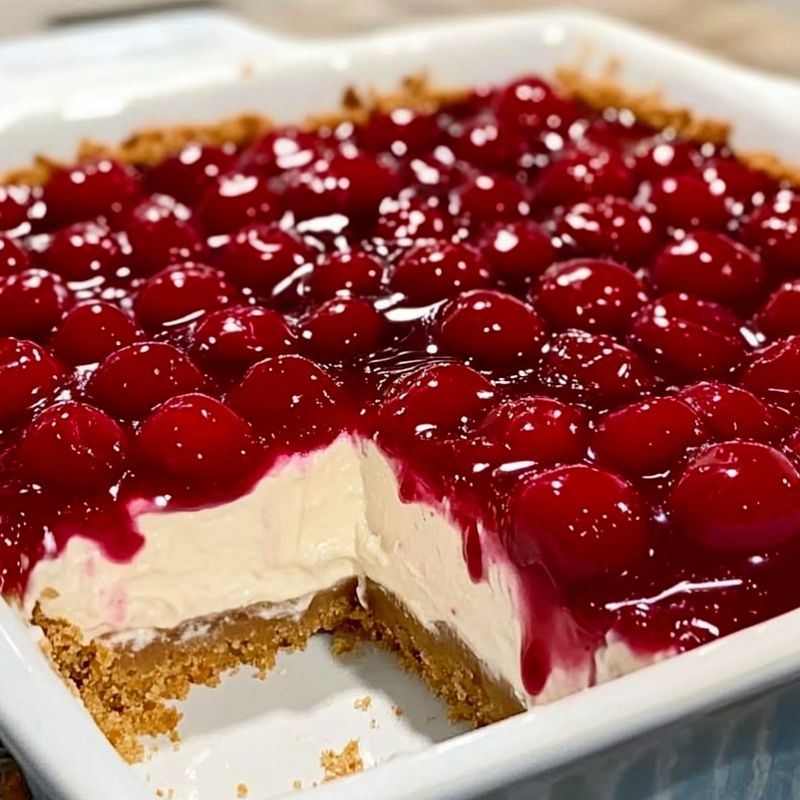
Not every church potluck pan needs an oven, and this cheerful red dessert proves it. Cherry delight is a chilled layered treat that has filled community cookbooks for decades, often under names like cherry yum yum or cherry cheese delight.
It saves your oven for the main dishes. You can make it the day before, which is exactly what busy potluck cooks want.
The bottom is a graham cracker crust. Mix crumbs with sugar and melted butter, then press it firmly into a 9x13-inch pan and chill it.
The middle layer is fluffy and sweet. Beat softened cream cheese with powdered sugar, then fold in whipped topping.
Spread that layer over the crust, and finish with canned cherry pie filling. Chill it for several hours or overnight, so it slices cleanly.
Blueberry pie filling is a popular swap, and some families use homemade whipped cream instead. Because cream cheese is perishable, current USDA advice says keep it cold and do not leave it out more than two hours.
A cooler with ice packs is your best friend on the drive. Bring a pie server, since clean squares make a pretty plate.


Leave a Reply