
Stale bread is the hero of this recipe, and that's not a joke. Drier bread cubes soak up liquid without collapsing into mush, so day-old loaves beat fresh ones here.
This dish also goes by strata, from the Italian word for layers, and the name fits. Bread, sausage, and sharp cheddar get stacked in a pan, then soaked in a seasoned egg and milk mixture overnight.
The real charm is the schedule, since the chopping, browning, and whisking happen on Christmas Eve. On Christmas morning, your main job is turning on the oven and waiting for a golden, bubbling pan.
I love that trade, because a little work the night before buys a slower, calmer morning with a hot breakfast for a big crowd. So grab a 9x13-inch dish, and let's look at what goes into this Christmas morning breakfast casserole.
What Goes Into a Sausage and Cheddar Overnight Casserole

Day-old bread and a well-seasoned egg mixture do most of the heavy lifting in this recipe. Sturdy bread holds its shape while it soaks, and the dry mustard quietly sharpens the cheddar.
Servings: 12
Prep Time: 30 minutes on Christmas Eve
Chill Time: 8 to 24 hours
Bake Time: 50 to 60 minutes, plus 10 minutes resting
Total Time: about 9 hours 30 minutes, including the overnight chill
For the Sausage:
- 1 lb (450 g) bulk pork breakfast sausage, casings removed if using links
For the Casserole:
- Butter or cooking spray, for greasing the dish
- 8 cups (about 1 lb or 450 g) day-old French or sturdy white bread, cut into 1-inch cubes
- 2 cups (8 oz or 225 g) shredded sharp cheddar cheese, divided
For the Egg Mixture:
- 8 large eggs
- 2 ½ cups (600 ml) whole milk
- 1 teaspoon dry mustard
- 1 teaspoon salt
- ½ teaspoon black pepper
You'll also need a 9x13-inch baking dish, a large skillet, a big mixing bowl, and foil. An instant-read thermometer is the most useful tool here, since it checks both the sausage and the finished center.
Step 1: Brown the Sausage to 160°F and Drain Off the Grease
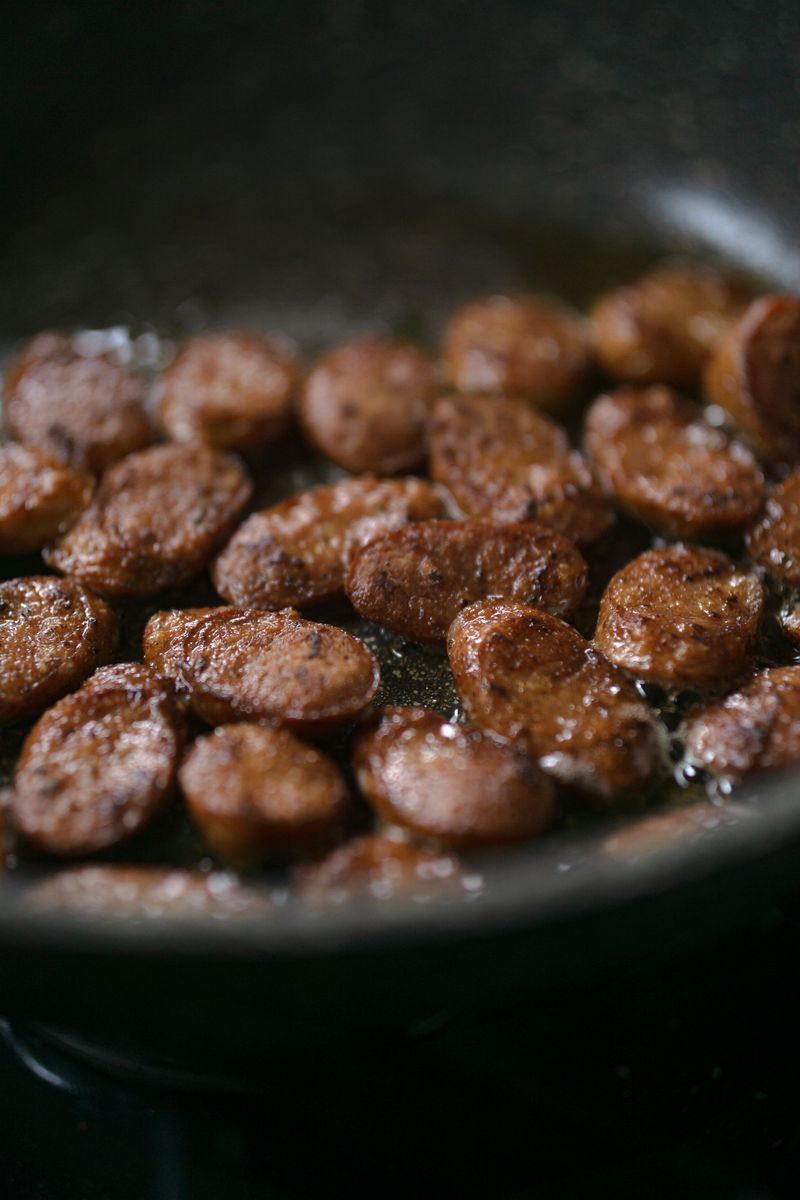
Christmas Eve kicks things off with a sizzling skillet. Crumble 1 pound of bulk pork breakfast sausage into a large skillet over medium heat.
Break the meat into small, pea-sized bits with a wooden spoon as it cooks, about 8 to 10 minutes. Small crumbles spread more evenly through the bread, so nobody ends up with a giant sausage boulder in one corner.
Brown bits on the meat are a good sign, since they add savory flavor. Pale, steamed sausage tastes flatter, so give it room in the pan.
Cook until no pink remains and an instant-read thermometer reads 160°F (71°C), which is the USDA safe temperature for ground pork. Color alone can fool you, so the thermometer is worth the extra few seconds.
Tip the cooked sausage onto a plate lined with paper towels to drain the grease. Extra fat would pool in the casserole and leave greasy, soggy patches after baking.
Let the sausage cool for about 10 to 15 minutes before you layer it. Hot meat can start cooking the eggs on contact and warm up the dish before it goes into the fridge.
Quick Tip: Using links? Slit the casings and squeeze out the meat first, so it crumbles like bulk sausage.
Step 2: Grease the 9x13-Inch Dish and Cube Day-Old Bread
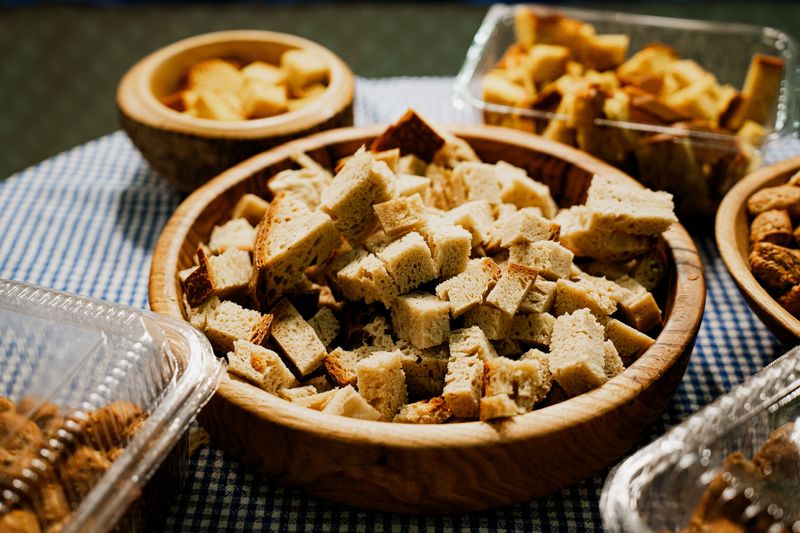
Stale bread finally gets its moment to shine. Fresh, soft bread tends to collapse into paste once it soaks overnight, while drier bread acts like a sturdy sponge.
Start by greasing a 9x13-inch baking dish with butter or cooking spray, covering the corners and sides. Egg mixtures love to glue themselves to bare glass, and a good coating makes serving much easier.
Cut about 1 pound of day-old French or sturdy white bread into 1-inch cubes, which should give you around 8 cups. Crusts can stay on, since they add chew and help the cubes hold their shape.
Is your bread too fresh? Spread the cubes on a baking sheet and toast them at 300°F (150°C) for about 10 to 15 minutes, until dry but not browned.
Soft sandwich bread works in a pinch, but it gives a softer, more pudding-like result. Chewier loaves keep a little more structure after baking.
Scatter half of the bread cubes in an even layer across the greased dish. The other half waits on the counter for the layering step, so keep it close by.
Quick Tip: Cut the cubes close to the same size so they soak and bake at the same pace.
Step 3: Whisk Eggs, Milk, and Dry Mustard Into a Smooth Custard
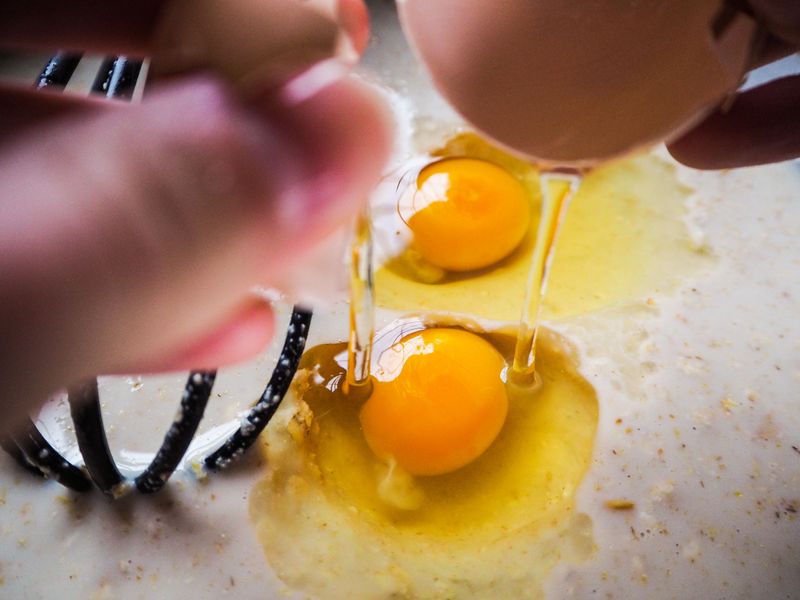
Eight eggs and a pinch of mustard powder might sound like an odd pairing, but they make a smart team. Crack 8 large eggs into a large mixing bowl and whisk until the yolks and whites blend into one even color.
Pour in 2 ½ cups of whole milk, then add 1 teaspoon of dry mustard, 1 teaspoon of salt, and ½ teaspoon of black pepper. Whisk for about a minute, until the mixture looks smooth and slightly frothy with no streaks of egg white.
Why bother with dry mustard? It won't make the casserole taste like a hot dog, but it sharpens the cheddar and adds a mild savory edge.
Streaks of unmixed white can bake into rubbery, pale pockets, so take the extra seconds here. A fork works, though a balloon whisk blends faster and with less splashing.
Whole milk gives the custard a richer, creamier set than skim milk. Lower-fat milk still works, but expect a slightly firmer, less tender texture.
Keep the bowl in the fridge if you need a few minutes before layering. Raw egg mixtures shouldn't sit around on the counter.
Quick Tip: Stir the dry mustard into the salt and pepper first so it doesn't clump in the eggs.
Step 4: Layer Bread, Sausage, and Cheddar, Then Pour the Eggs Evenly
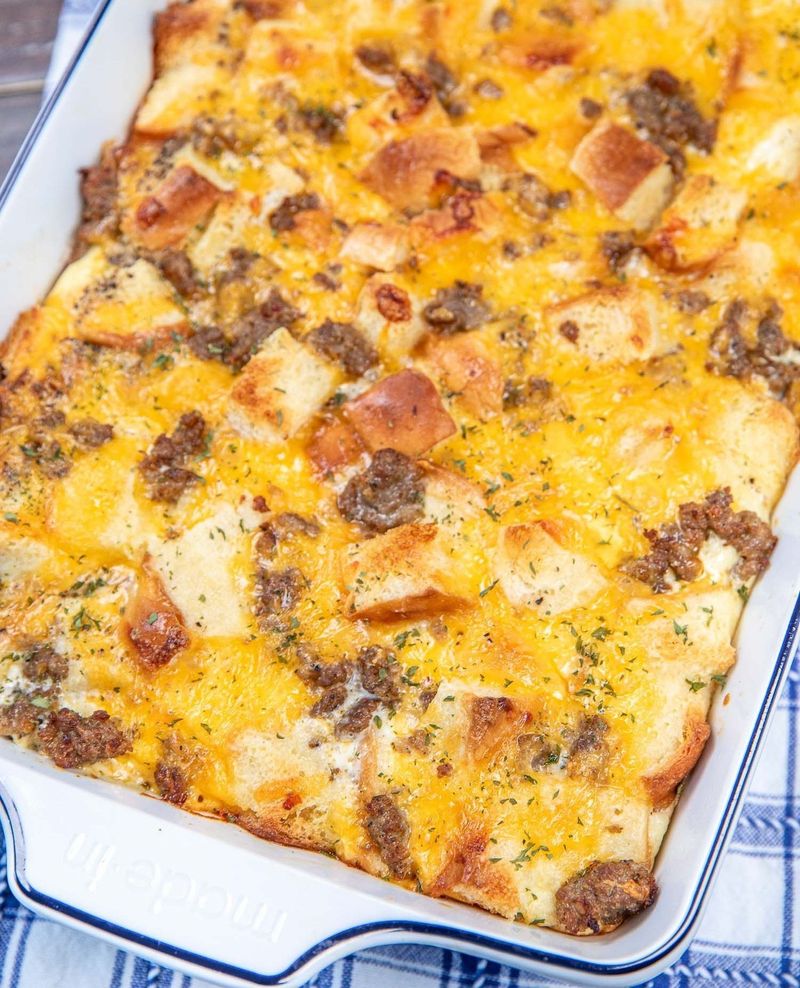
Stacking is the fun part, and it's where the strata earns its name. Sprinkle half of the cooled sausage over the bread cubes already in the dish, then add ¾ cup of the shredded cheddar.
Add the remaining bread cubes, followed by the rest of the sausage and another ¾ cup of cheese. Save the last ½ cup of cheddar for Christmas morning, when it goes on top during baking.
Give the egg mixture one last quick whisk, since the mustard can settle at the bottom. Pour it slowly over the whole dish, moving in a back-and-forth pattern so the liquid reaches the edges and corners.
Press the bread down gently with a spatula or the back of a large spoon. You want each cube touching the custard, though a few corners peeking out will turn nicely crisp.
The dish will look very full and soupy at this point, which is exactly right. Over the next several hours, the bread will drink up much of that liquid.
Quick Tip: Set the dish on a rimmed baking sheet before pouring, which catches drips and makes the trip to the fridge less wobbly.
Step 5: Cover the Casserole Tightly and Let the Fridge Work Overnight
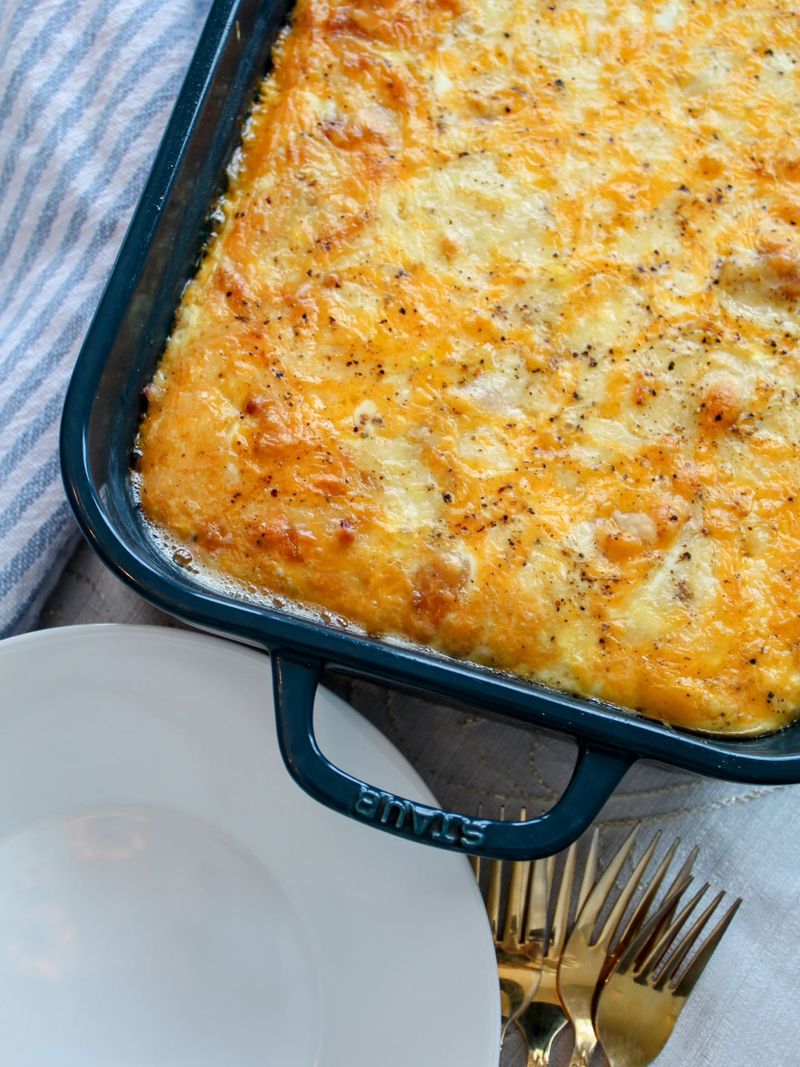
Patience does the real cooking in this step. Cover the dish tightly with foil or plastic wrap, pressing the edges down so the casserole doesn't dry out or pick up fridge smells.
Slide the casserole into the refrigerator right away and chill it for at least 8 hours. Many tested recipes allow up to 24 hours, which gives you plenty of wiggle room on a busy Christmas Eve.
Because the dish holds raw eggs and milk, it must stay in the fridge the whole time. Never leave the assembled casserole on the counter overnight, even if the kitchen feels chilly.
During the chill, the bread soaks up the custard and softens from the inside out. That long rest is why the baked casserole turns out tender and evenly moist instead of dry in some spots and wet in others.
Clear a flat shelf ahead of time, since holiday fridges fill up fast. A level spot keeps the custard from sliding to one side.
Keep the remaining ½ cup of cheddar covered in the fridge, too. It joins the party in the morning for a melty, golden top.
Quick Tip: If you used plastic wrap, swap it for foil before baking, since plastic can't go in the oven.
Step 6: Bake Until the Center Is Set and Golden on Top
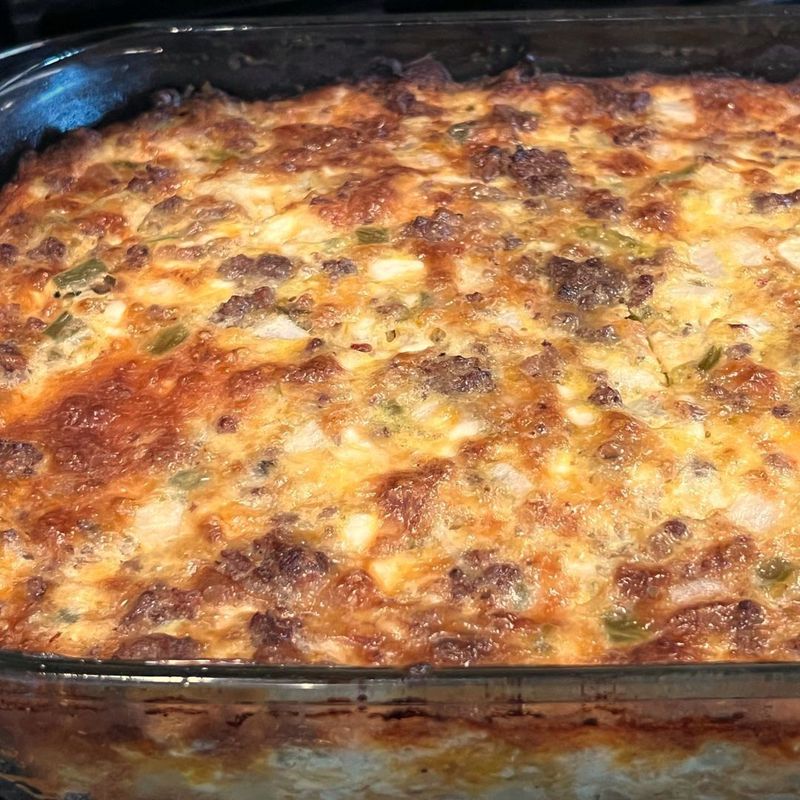
Christmas morning starts with one easy move: turning on the oven. Take the casserole out of the fridge and preheat the oven to 350°F (175°C), letting the dish sit on the counter for about 20 to 30 minutes while the oven heats.
That short rest takes the deep chill off and stays well within the USDA two-hour limit for perishable food. If you're using a glass dish, this step also helps protect it from a sudden temperature shock.
Bake covered with foil for 30 minutes. Then remove the foil, sprinkle the remaining ½ cup of cheddar over the top, and bake uncovered for another 20 to 30 minutes.
Look for a puffed, golden top and a center that no longer jiggles when you nudge the dish. A knife inserted near the middle should come out clean, without wet egg clinging to it.
For the surest check, use an instant-read thermometer in the center of the casserole. USDA guidance says egg casseroles should reach 160°F (71°C), so keep baking in 5-minute bursts if it falls short.
Quick Tip: If the top browns before the center is done, lay foil loosely back over it.
Step 7: Rest the Casserole 10 Minutes, Then Slice Neat Squares
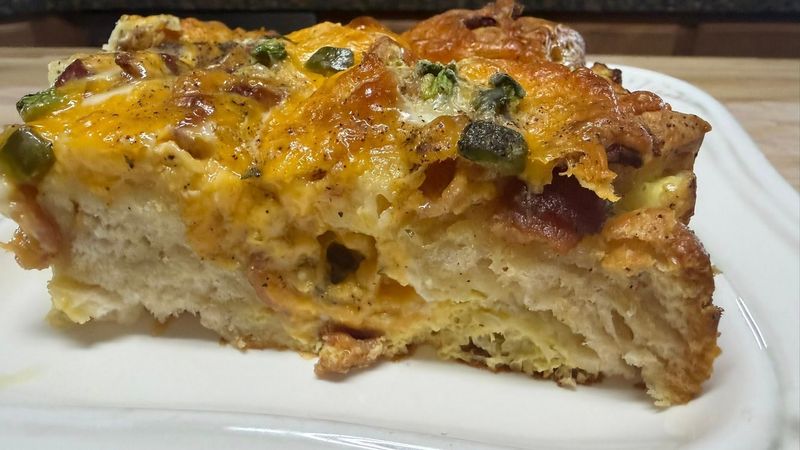
Waiting is tough when the kitchen smells like sausage and cheddar, but these minutes count. Set the hot dish on a cooling rack or trivet and let it rest for about 10 minutes.
Resting gives the custard time to finish setting from the leftover heat. Cut too soon, and the slices may slump or leak a little liquid onto the plate.
Use a sharp knife or a thin metal spatula to cut the casserole into 12 squares, a 3-by-4 grid. Wipe the blade between cuts if you want clean, photo-ready edges that show the bread, sausage, and cheese layers.
A wide spatula slides under each piece more easily than a spoon. Start with a corner square, since it's the easiest one to wiggle free, and the rest will follow.
Crispy corner pieces tend to disappear first, so cut fairly if that matters at your table. The center slices are softer and more custardy.
Simple sides fit right in, like fresh fruit, orange juice, or hot cocoa. The casserole already brings protein, bread, and cheese, so you don't need a long menu.
Quick Tip: Tent the dish loosely with foil if guests run late, but don't leave it out longer than 2 hours.
A Christmas Eve to Christmas Morning Breakfast Casserole Timeline
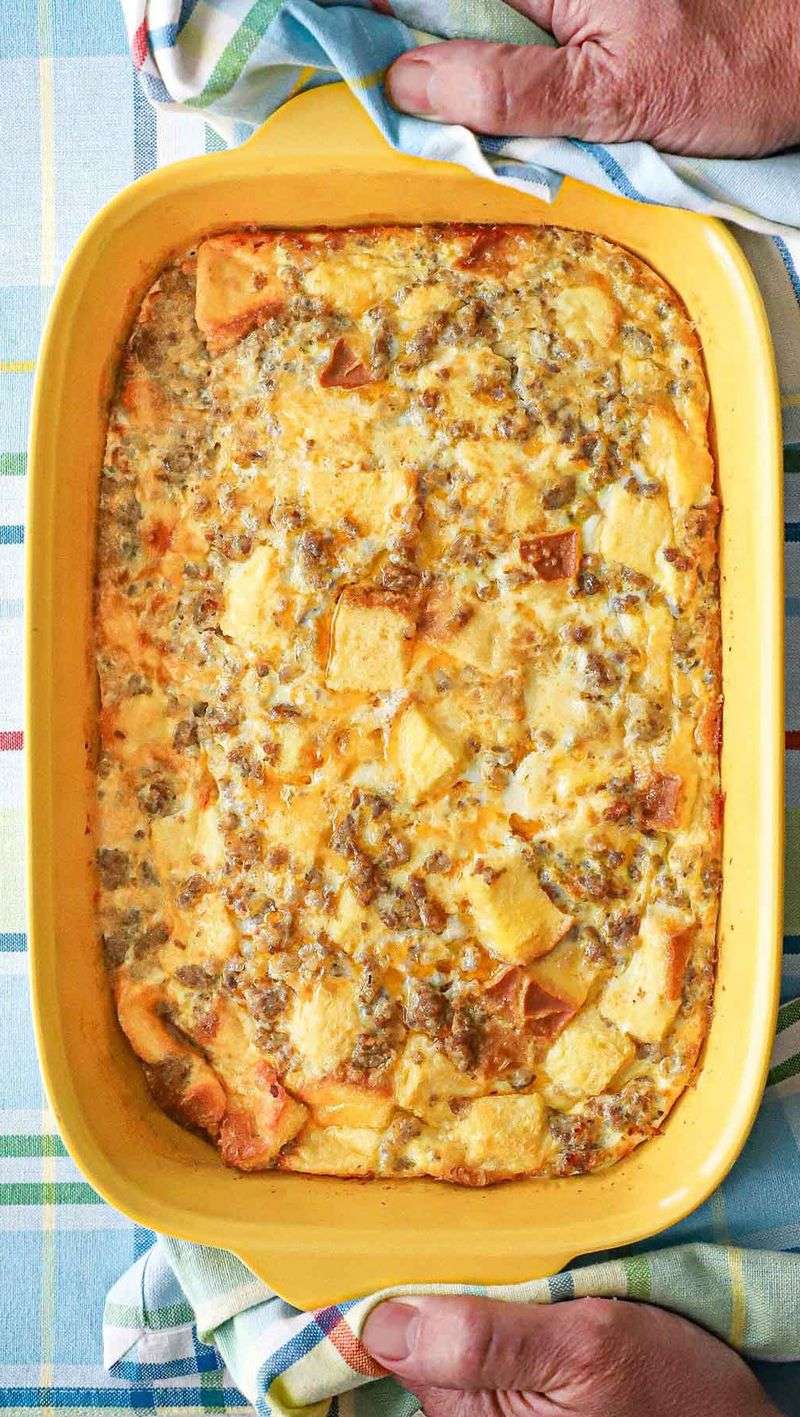
Good timing turns this recipe from a project into a background task. Here's a simple plan that spreads about 30 minutes of hands-on work across two days.
Christmas Eve:
- Optional head start: Cube the bread a day or two early and leave it out to dry.
- Afternoon or evening (30 minutes): Brown and drain the sausage, grease the dish, whisk the eggs, layer, and pour.
- While the sausage cools: Shred the cheese and measure the seasonings.
- Right after assembling: Cover tightly and refrigerate for at least 8 hours and up to 24.
Christmas Morning:
- About 90 minutes before eating: Take out the casserole and preheat the oven to 350°F (175°C).
- 20 to 30 minutes later: Bake covered for 30 minutes.
- Next 20 to 30 minutes: Uncover, add the last cheddar, and bake until set and 160°F (71°C) in the center.
- Final 10 minutes: Rest, slice, and serve.
Ovens and dishes vary, so treat these times as a guide rather than a promise. If the middle still jiggles, keep baking in 5-minute rounds and keep the cocoa coming while you wait.
Storing, Reheating, and Freezing Leftover Breakfast Casserole
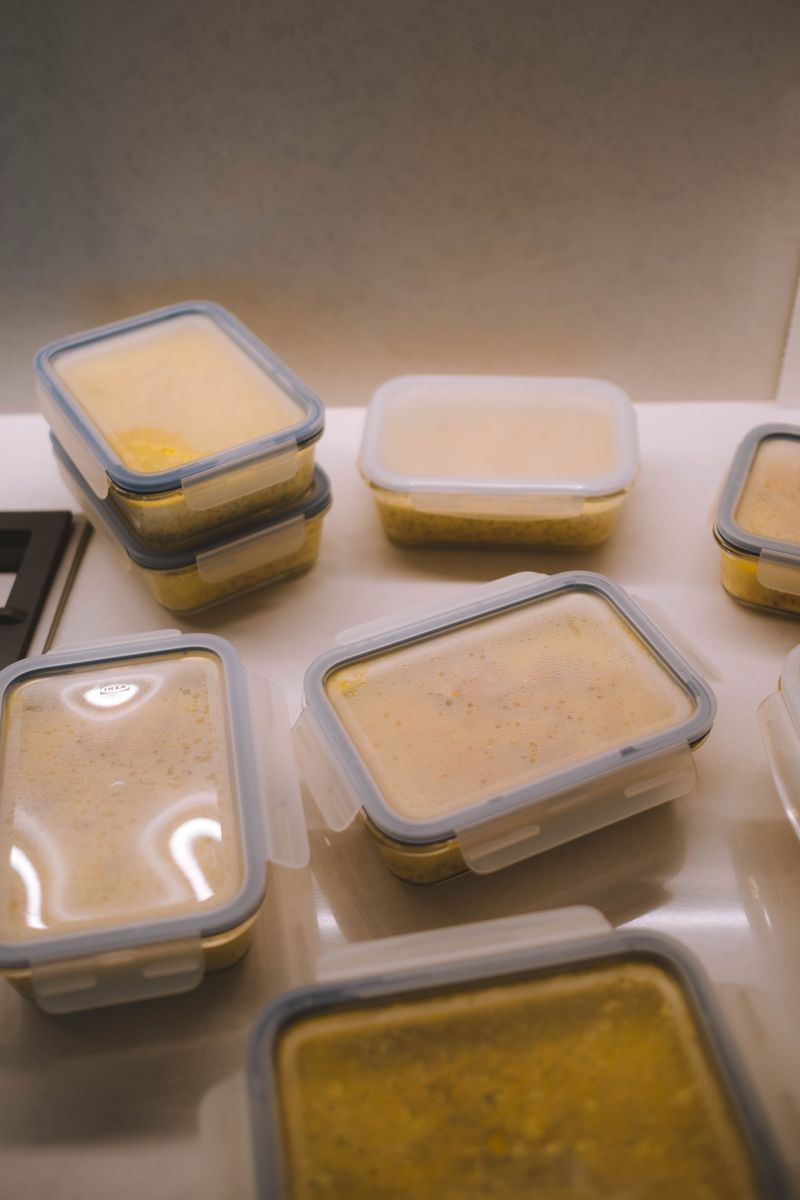
Leftover casserole might be the quiet bonus gift of the season. Get it into the fridge within 2 hours of baking, since USDA guidance says perishable food shouldn't sit out longer than that.
Store slices in shallow, airtight containers or cover the dish tightly. Cooked egg dishes keep about 3 to 4 days in the refrigerator, so plan a few easy breakfasts around them.
To reheat a single slice, microwave it on a plate covered with a damp paper towel in 30-second bursts. For bigger batches, cover the dish with foil and warm it in a 350°F (175°C) oven for about 20 to 25 minutes.
Either way, heat leftovers until they reach 165°F (74°C) in the center, the USDA target for reheated food. Gentle heat and a foil cover help keep the eggs from drying out.
Freezing works best with the baked casserole. Wrap cooled slices tightly in plastic wrap and foil, then freeze for 2 to 3 months for top quality.
Thaw slices overnight in the fridge before reheating. Expect the texture to turn a bit softer and moister than fresh, since freezing changes how eggs hold water.
Easy Swaps With Ham, Bacon, Veggies, and Other Cheeses

Swapping one ingredient can give this casserole a whole new personality. Keep the bread, egg, and milk amounts the same, and change the add-ins with a little care.
- Ham: Use about 2 cups of diced cooked ham instead of sausage. It's leaner and saltier, so you may want to cut the salt to ½ teaspoon.
- Bacon: Cook about 12 ounces until crisp, drain, and crumble it. Expect a smokier flavor, though the bits soften during the overnight soak.
- Cheese: Swap the cheddar for Monterey Jack, pepper Jack, Swiss, or Gruyère in the same 2-cup amount. Milder cheeses melt smoothly, while pepper Jack adds gentle heat.
- Vegetables: Sauté about 1 cup of diced onion, bell pepper, or mushrooms until soft before layering. Wilt fresh spinach and squeeze it dry, since raw veggies release water and can make the center soggy.
- Bread: Sourdough adds tang, while challah or brioche bakes up richer and softer. Keep any bread day-old for the best soak.
Make just one or two swaps at a time so you can tell what changed. Turkey sausage can stand in too, but cook it to 165°F (74°C) and expect a leaner, drier bite.
Why Breakfast Casseroles Turn Soggy and How to Fix It
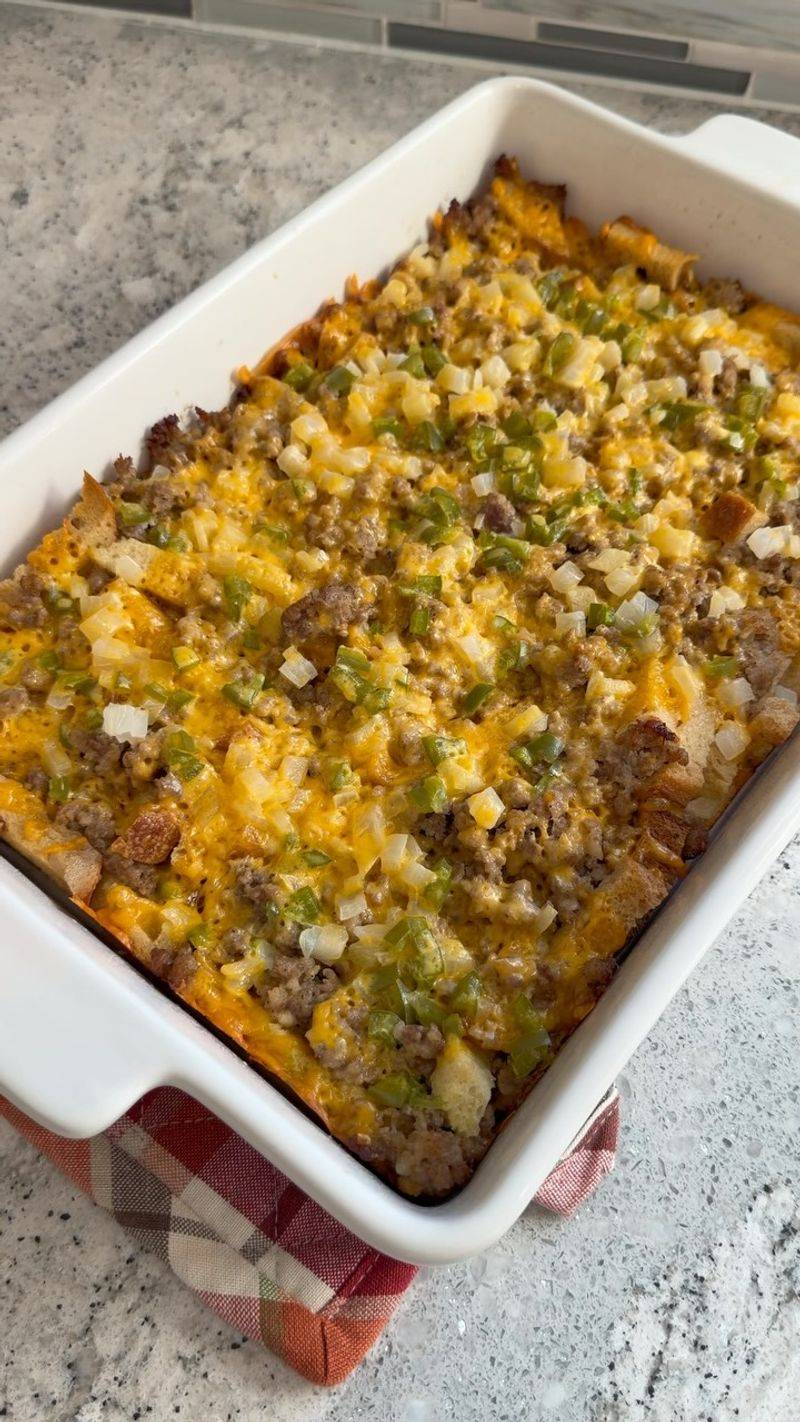
A casserole that misbehaves usually leaves clues behind. Match what you see to the likely cause, and the next batch has a much better shot.
- Soggy or wet center: The middle may be underbaked, or watery add-ins may have leaked. Bake until the center hits 160°F (71°C), and drain sausage and cook vegetables well before layering.
- Undercooked middle with a dark top: The oven may run hot, or the dish went in too cold. Tent with foil, keep baking, and check your oven with an oven thermometer.
- Rubbery or weepy eggs: Overbaking squeezes moisture out of the custard. Start checking at the low end of the bake time and pull it once the center is set.
- Dry bread on top: Some cubes never touched the liquid. Press the bread down after pouring, and again before baking if needed.
- Tough, chewy top: The cheese and exposed bread may have baked uncovered too long. Keep the foil on for the first 30 minutes as written.
- Mushy, pasty texture: Fresh, soft bread is the usual suspect. Dry the cubes in a low oven next time.
Write down any changes you make, like a new bread or extra veggies. That small note makes next Christmas morning much easier to plan.




Leave a Reply