
Tuscan chicken pasta, the kind on so many American menus, is not a classic dish from Tuscany. The name is mostly a nod to flavors Americans link with Italy: sun-dried tomatoes, garlic, spinach, and plenty of cream.
I love that a label can travel that far from home.
The cloudy water left in your pasta pot has a job too. Starch from the noodles helps the fat and liquid in a cream sauce hold together, so the sauce clings instead of sliding off.
Even the jar of sun-dried tomatoes pulls double duty. Its oil already carries tomato and herb flavor, and you can use a spoonful to cook the garlic.
The method keeps things simple. You cook the pasta in one pot and build the rest in one large skillet, with dinner ready in about 35 minutes.
Grab your ingredients and let's get cooking.
The Short Ingredient List Behind Tuscan Chicken Pasta
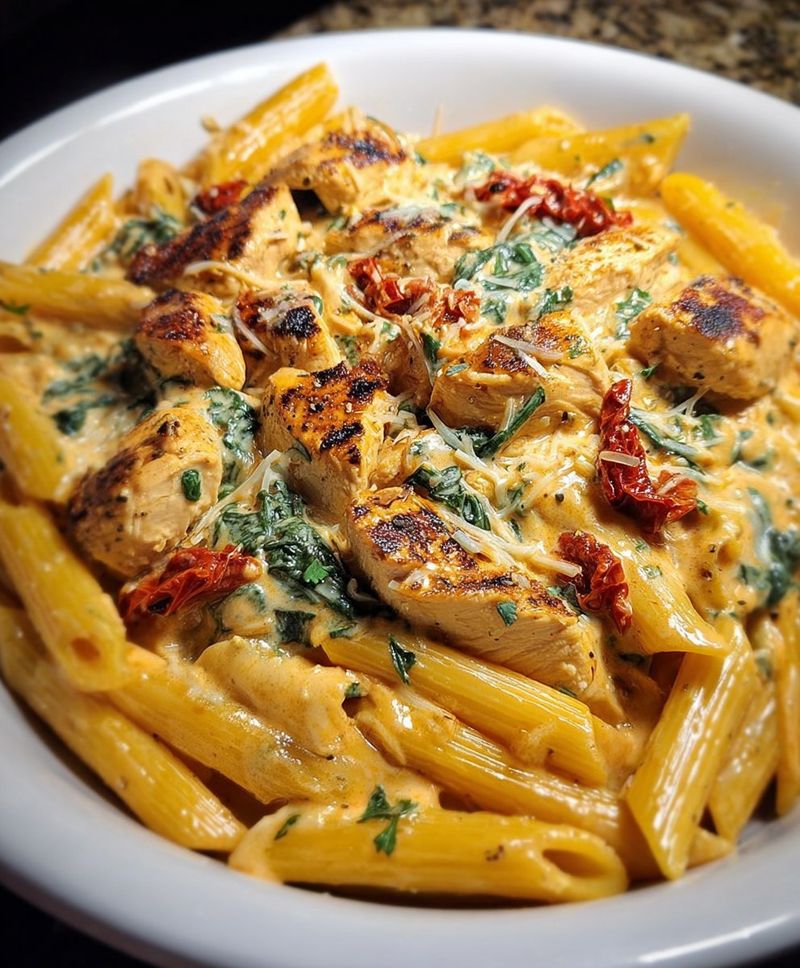
Sun-dried tomatoes and real Parmesan do most of the heavy lifting here. Buy oil-packed tomatoes, and grate the cheese fresh so it melts smoothly.
Servings: 6
Prep Time: 10 minutes
Cook Time: 25 minutes
Total Time: 35 minutes
For the Chicken:
- 1 ¼ lbs (about 570 g) boneless, skinless chicken breasts, cut into bite-size pieces
- 1 tablespoon olive oil
- ½ teaspoon salt
- ¼ teaspoon black pepper
For the Pasta:
- 12 ounces (340 g) penne or rigatoni
- 1 tablespoon kosher salt, for the pasta water
For the Sauce:
- 1 tablespoon olive oil or oil from the sun-dried tomato jar
- 2 cloves garlic, minced
- ½ teaspoon dried oregano
- ½ teaspoon dried parsley
- ¼ teaspoon dried basil
- ¼ teaspoon dried marjoram
- ¼ teaspoon red pepper flakes
- ⅔ cup (160 ml) sun-dried tomatoes packed in oil, drained and chopped
- ⅔ cup (160 ml) low-sodium chicken broth
- 1 ½ cups (360 ml) heavy cream
- ¾ cup freshly grated Parmesan cheese
- 4 cups baby spinach
- Salt and pepper, to taste
Before you start, pull out a large pot, a large skillet, and an instant-read thermometer for the chicken. Most of this list keeps well in the pantry or fridge, which makes a last-minute dinner easier to pull off.
Step 1: Boil the Penne Until Al Dente and Save a Cup of Pasta Water
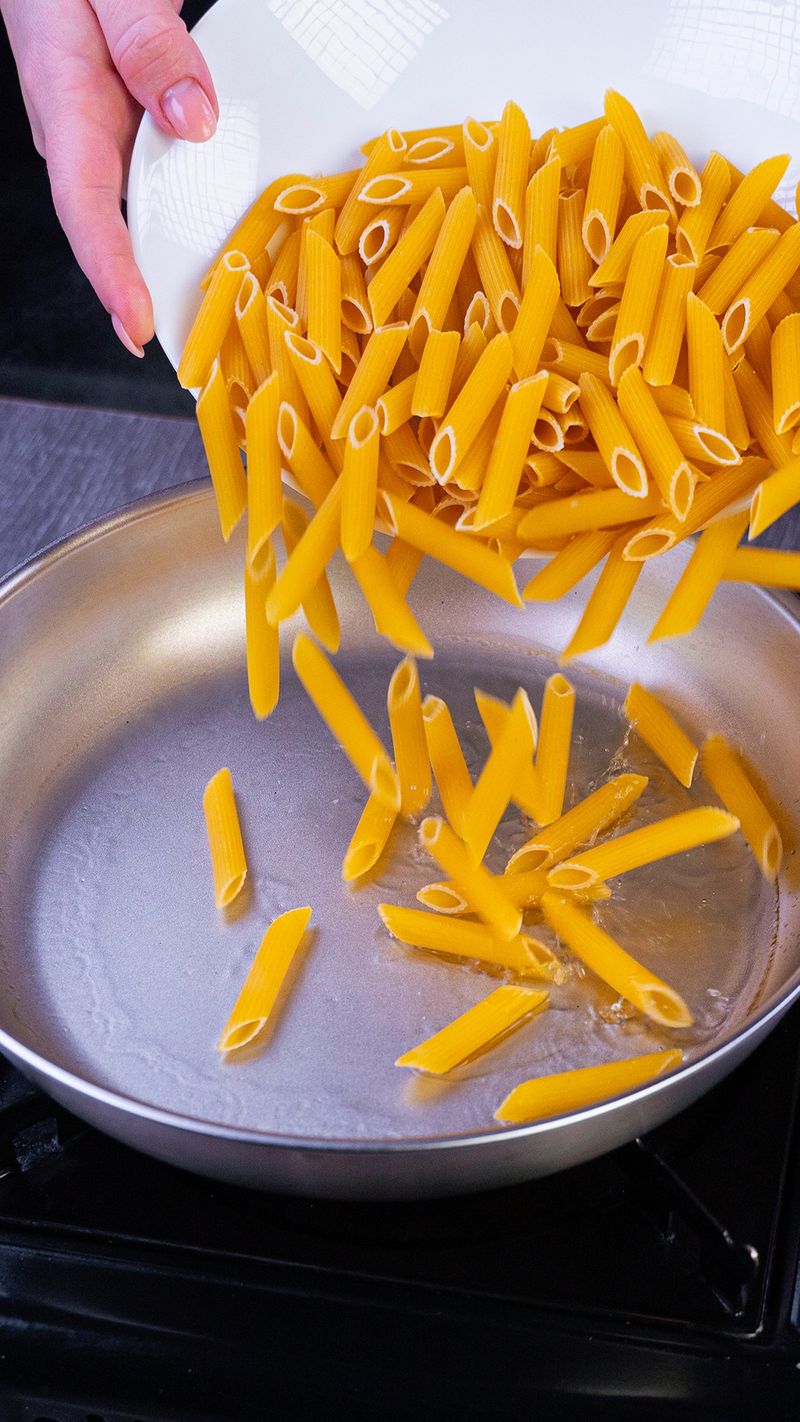
Pasta water is the quiet helper in this recipe, so don't let it go down the drain. Bring a large pot of water to a rolling boil, then stir in 1 tablespoon of kosher salt.
Add 12 ounces of penne or rigatoni and stir right away so the pieces don't stick together. Cook it according to the package directions until al dente, which means tender but still a little firm when you bite it.
Pasta keeps softening once it hits the sauce later, so slightly firm is the goal here. Taste a piece a minute before the package time ends to check.
Before draining, scoop out at least 1 cup of the cloudy cooking water and set it aside. Then drain the pasta, but skip rinsing, since the starch on the surface helps the sauce stick.
While the pasta cooks, you can start the chicken in your skillet to save time. Keep an eye on both pans, and set a timer so the noodles don't get mushy.
Quick Tip: Set a heatproof measuring cup next to the colander as a reminder, because it's easy to forget the water once the pot is heavy in your hands.
Step 2: Sear the Chicken Until It's Golden and 165°F Inside
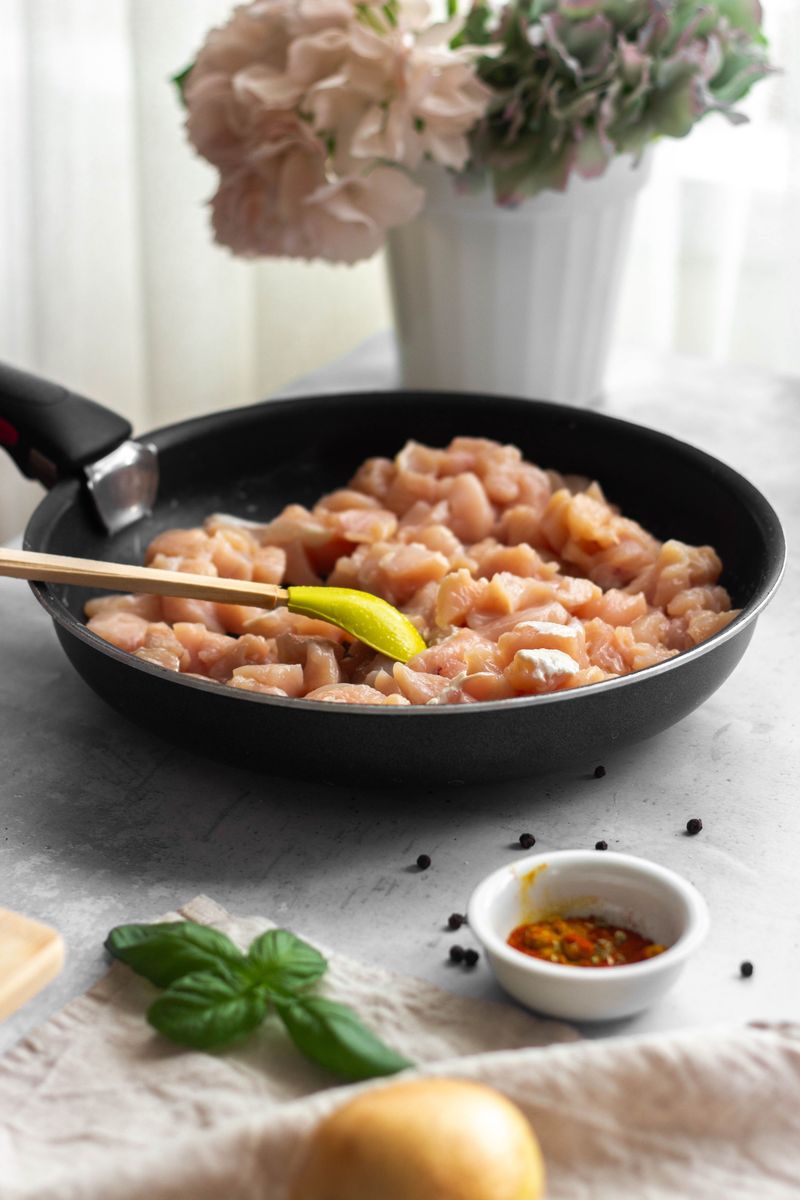
Dry chicken browns, and wet chicken steams, so grab a few paper towels first. Pat the 1 ¼ pounds of bite-size chicken pieces dry, then season them with ½ teaspoon salt and ¼ teaspoon black pepper.
Heat 1 tablespoon of olive oil in a large skillet over medium-high heat until it shimmers. Add the chicken in a single layer, leaving a little space between pieces so they sear instead of steam.
Cook for about 4 to 6 minutes, turning the pieces once or twice, until they're golden on the outside. Check a few of the thickest pieces with an instant-read thermometer, because the USDA says chicken is safe at 165°F (74°C).
Crowding the pan is a common reason chicken turns pale and rubbery. If your skillet is on the small side, sear the pieces in two batches.
Move the cooked chicken to a plate and let it rest while you make the sauce. Resting lets the juices settle back into the meat, so less of it ends up on the plate.
Quick Tip: Leave the browned bits in the skillet. Those flavorful spots will loosen up when the broth goes in and add depth to the sauce.
Step 3: Sizzle the Garlic and Sun-Dried Tomatoes in the Same Skillet
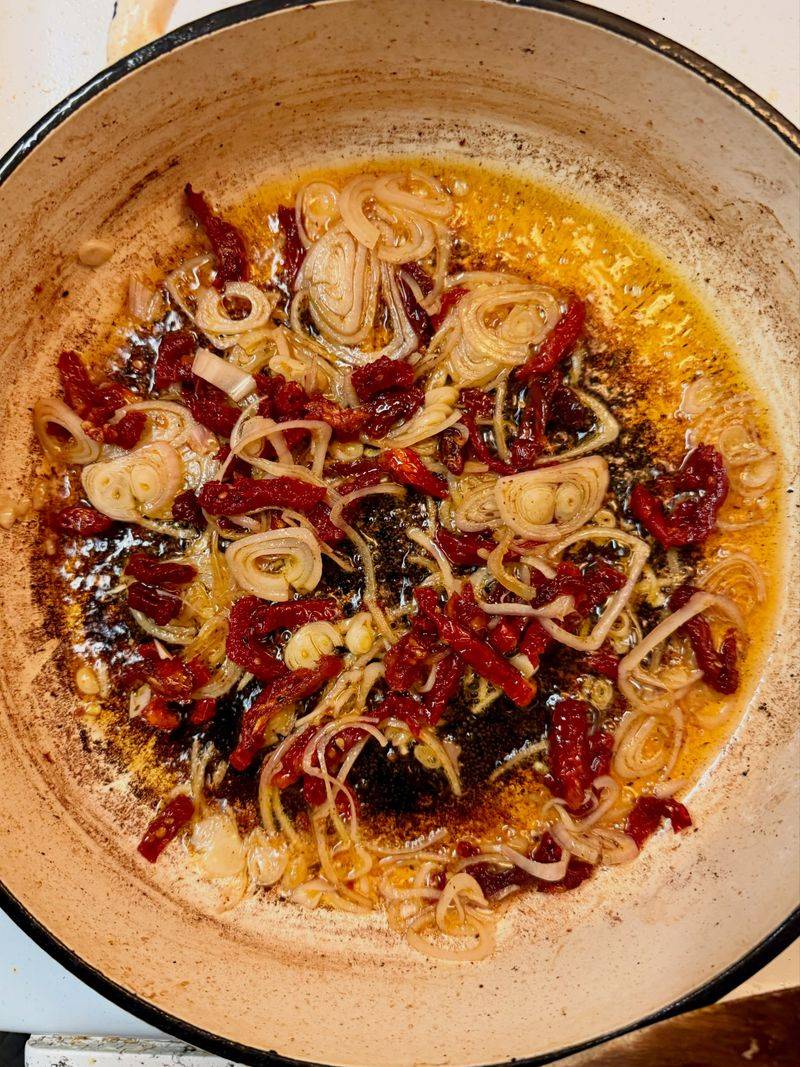
That jar of sun-dried tomatoes has a bonus inside: herb-infused oil you can cook with. Turn the skillet down to low and add 1 tablespoon of olive oil or oil spooned from the jar.
Stir in the 2 cloves of minced garlic along with ½ teaspoon dried oregano, ½ teaspoon dried parsley, ¼ teaspoon dried basil, ¼ teaspoon dried marjoram, and ¼ teaspoon red pepper flakes. Cook for about 1 minute, stirring, until the garlic smells fragrant.
Low heat matters here because garlic burns fast and turns bitter when it does. You want it soft and pale gold, not dark brown.
Add the ⅔ cup of drained, chopped sun-dried tomatoes and stir them through the garlic and spices. Give them a minute or so to heat up and soak in the seasoned oil.
Chopping the tomatoes into small pieces spreads their tangy, chewy bites through the dish. Big chunks can overpower a forkful, so a fairly fine chop works nicely.
Like a little heat? The red pepper flakes are easy to adjust, so use less for a milder skillet or a pinch more if your crowd likes spice.
Quick Tip: Scrape up the browned chicken bits as you stir to start pulling them into the sauce.
Step 4: Stir Parmesan Into the Cream for a Smooth Tuscan Sauce
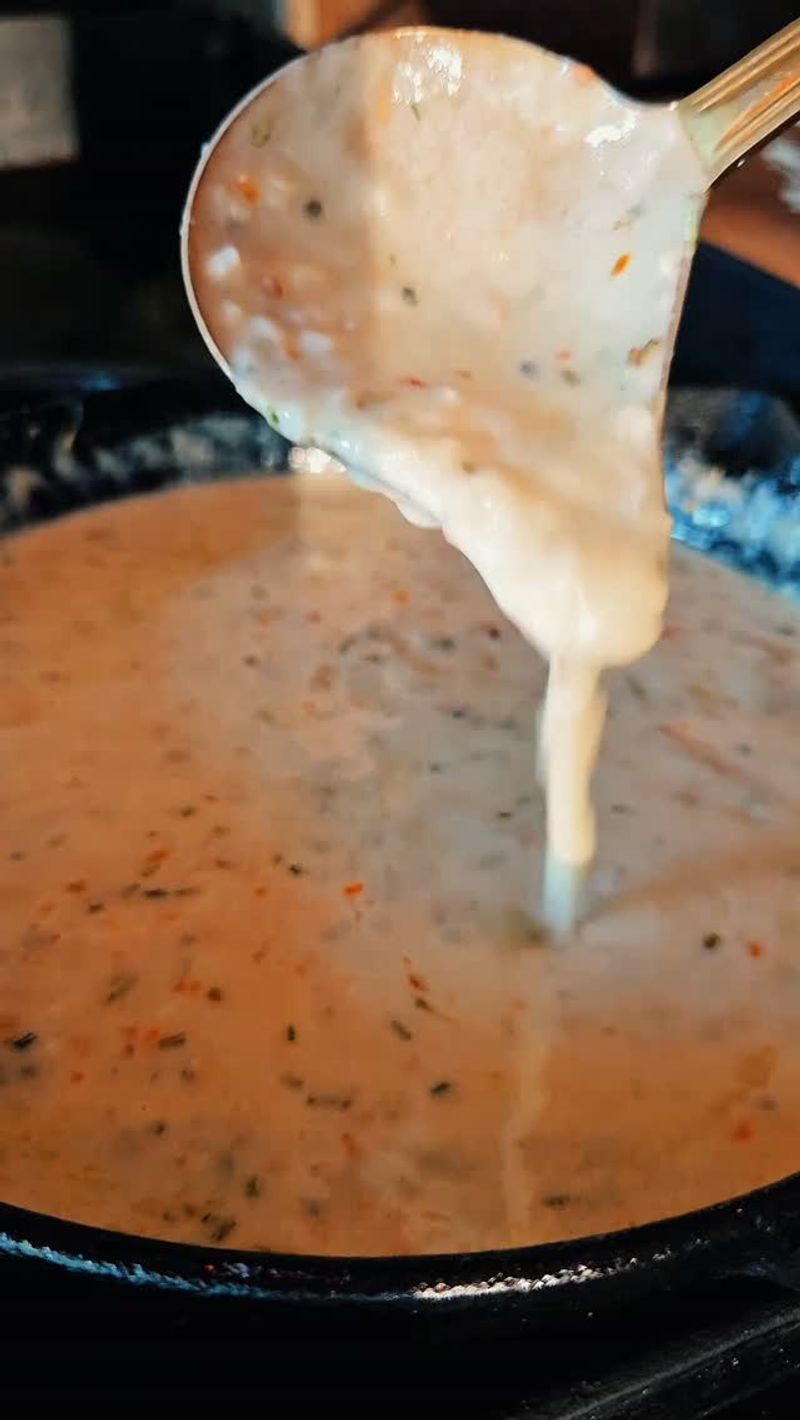
Patience turns a few simple liquids into a silky sauce. Raise the heat to medium-low and pour in ⅔ cup of low-sodium chicken broth, scraping the bottom of the pan as it bubbles.
Once the broth reaches a gentle simmer, stir in 1 ½ cups of heavy cream. Let it simmer softly for about 8 minutes, stirring often, until it thickens enough to coat the back of a spoon.
Keep the bubbles small and lazy rather than wild. A hard boil can push the cream toward separating, and nobody wants an oily puddle.
Next, turn the heat down to its lowest setting. Sprinkle in ¾ cup of freshly grated Parmesan a handful at a time, stirring until each batch melts before adding more.
Low heat and finely grated cheese help the Parmesan melt evenly instead of clumping. Pre-shredded cheese often contains anti-caking agents, which can make it melt less smoothly.
Taste the sauce once the cheese melts in. Parmesan is salty, so hold off on extra salt until the pasta and chicken join the pan.
Quick Tip: If the sauce starts to look grainy, pull the skillet off the heat and stir in a small splash of reserved pasta water to help it come back together.
Step 5: Fold In the Baby Spinach Until It Just Wilts
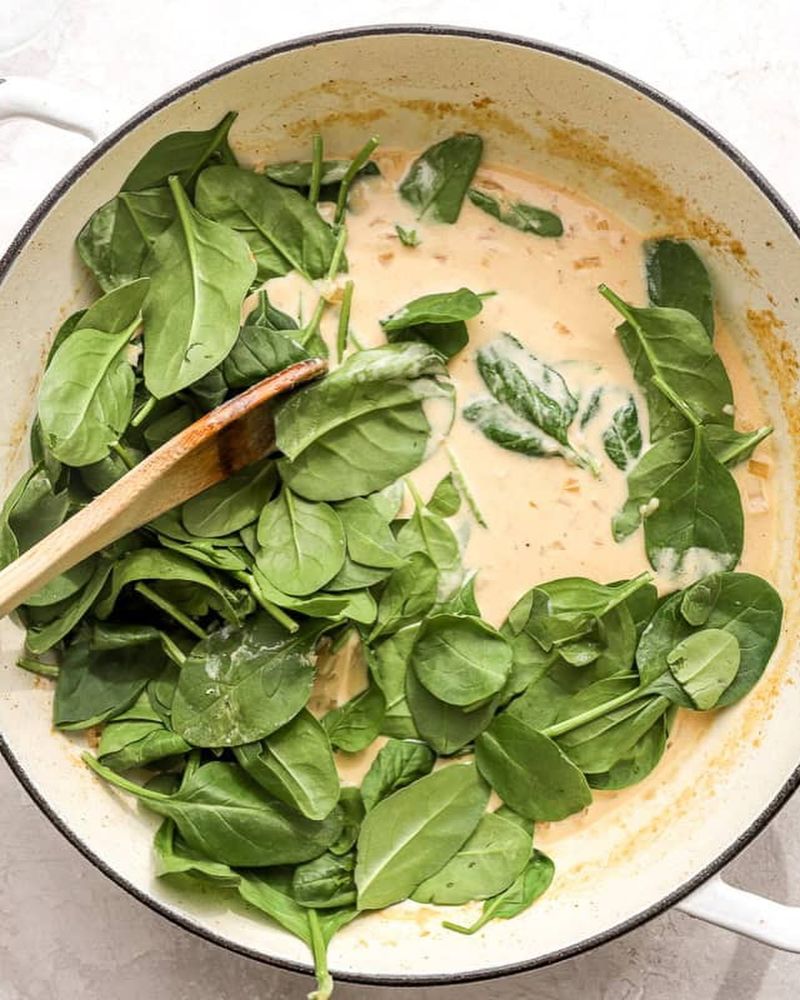
Four cups of spinach looks like a mountain, but it shrinks fast. Add the 4 cups of baby spinach to the skillet with the sauce still over low heat.
Stir gently, folding the leaves into the cream as they soften. In about 1 to 2 minutes, the spinach should collapse and turn a deep green.
Pull the pan off the heat as soon as the leaves are just wilted. Overcooked spinach goes dark and stringy, and it can release water that thins the sauce.
If the pile seems too big for your skillet, add it in two or three handfuls. Each batch makes room for the next within seconds.
Baby spinach is handy because the leaves are tender and the stems are small, so there's no chopping. If you only have mature spinach, pull off the thick stems and tear the leaves into smaller pieces first.
Spinach adds color and a mild, earthy contrast to the rich sauce. It also brings some vegetables into the bowl without extra pans or prep.
Got a bag of pre-washed spinach? Give it a quick look for any slimy leaves before tossing it in.
Step 6: Toss the Penne and Chicken and Loosen It With Pasta Water
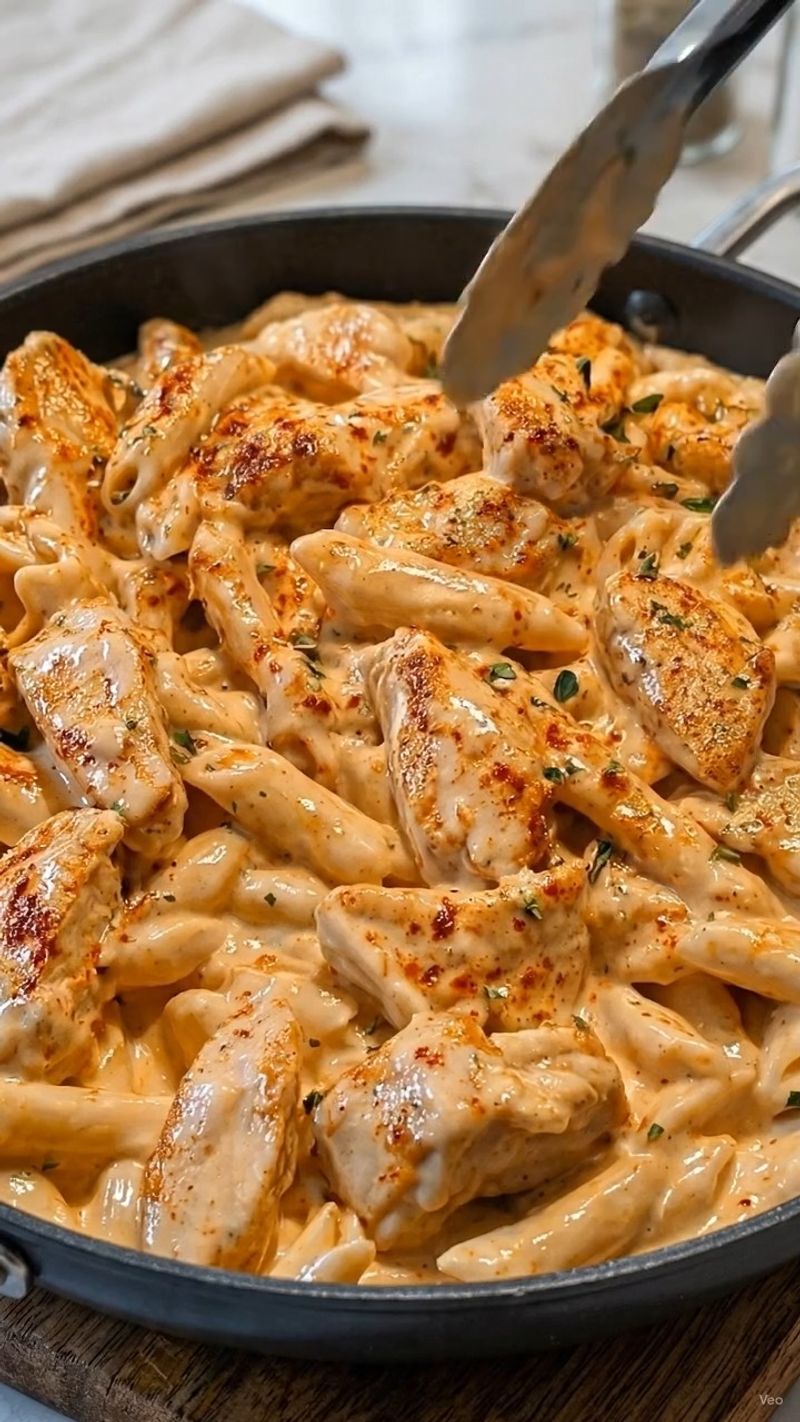
The reserved pasta water finally earns its spot on the counter. Add the drained penne or rigatoni to the skillet, then return the rested chicken and any juices from the plate.
Set the heat to low and toss with tongs or a large spoon until the pasta and chicken are coated. Give it a minute or two so the chicken heats back up.
Cream sauces tighten quickly once pasta joins the party, since the noodles soak up liquid. If the sauce looks thick or pasty, stir in the reserved pasta water a tablespoon or two at a time.
Stop adding water when the sauce looks glossy and clings to the noodles without pooling. The starch in that water helps the fat and liquid stay blended, so the coating stays smooth.
Now taste a noodle with some sauce on it. Add salt and pepper as needed, remembering that the Parmesan and broth already brought some salt.
Rigatoni has wide tubes that trap bits of tomato and spinach, while penne gives you neat, even bites. Either shape works, so use whichever is already in your pantry.
Try not to stir too roughly at this point. Gentle tossing keeps the chicken pieces whole and the pasta intact.
Step 7: Spoon It Into Bowls and Finish With Parmesan and Basil
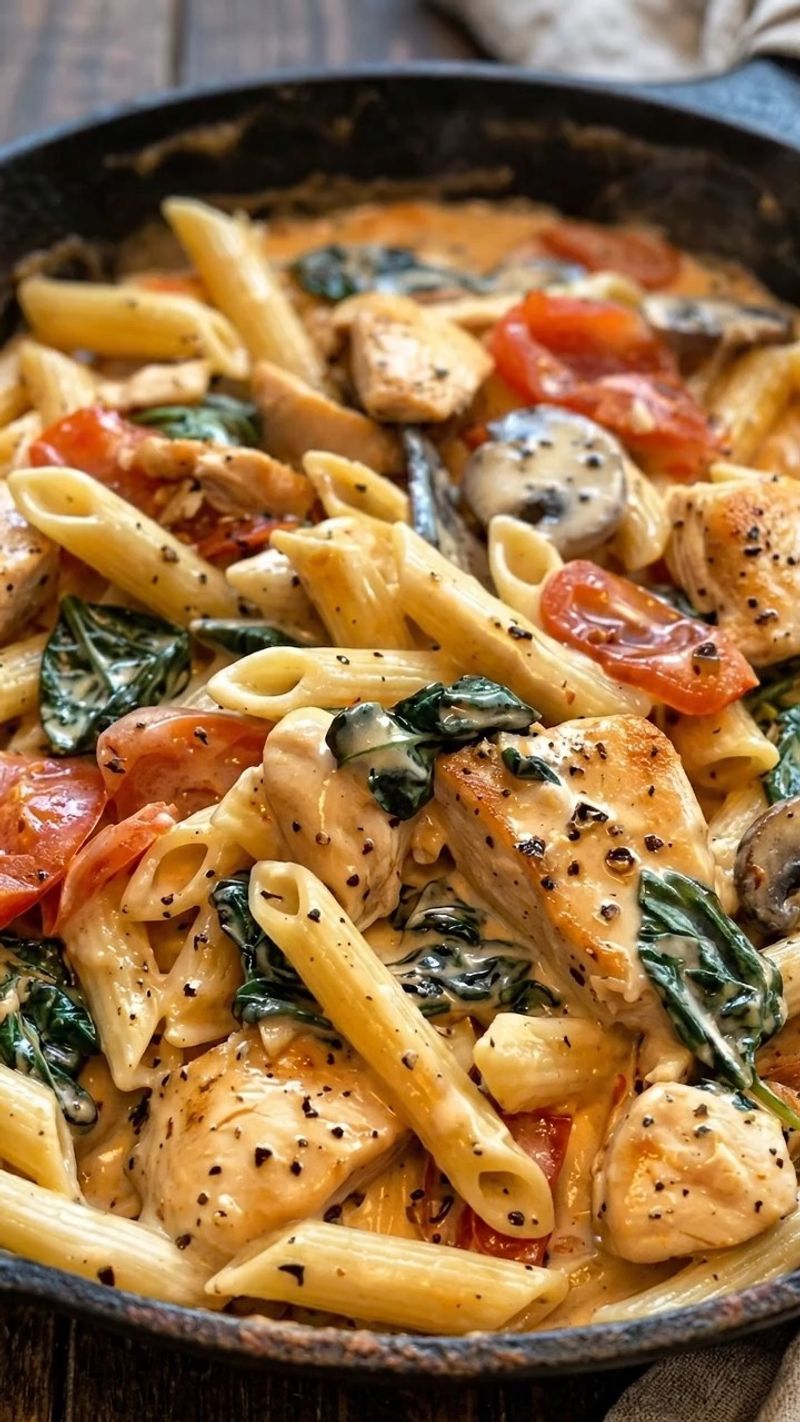
Cream sauce waits for no one, so call your crew to the table before you plate. The sauce keeps thickening as it sits, which is why serving right away matters.
Spoon the pasta into bowls, making sure each serving gets chicken, spinach, and sun-dried tomatoes. Scrape the skillet so the extra sauce doesn't get left behind.
Finish each bowl with a sprinkle of freshly grated Parmesan and a few fresh basil leaves. The basil adds a fresh, slightly sweet note that brightens the rich sauce.
Tear or thinly slice the basil right before serving, since cut basil darkens quickly. A small pinch of red pepper flakes on top is another easy option for spice fans.
This recipe makes six servings, so a hungry family of four may still have leftovers. Set those aside to cool a bit before they go into the fridge.
Want something on the side? A simple green salad or some crusty bread to swipe through the sauce fits right in with the meal.
Before you sit down, clear the stove of any hot pans. That small habit keeps the kitchen safer and makes cleanup feel less like a chore later.
Reheat Leftover Tuscan Chicken Pasta Without Drying Out the Sauce
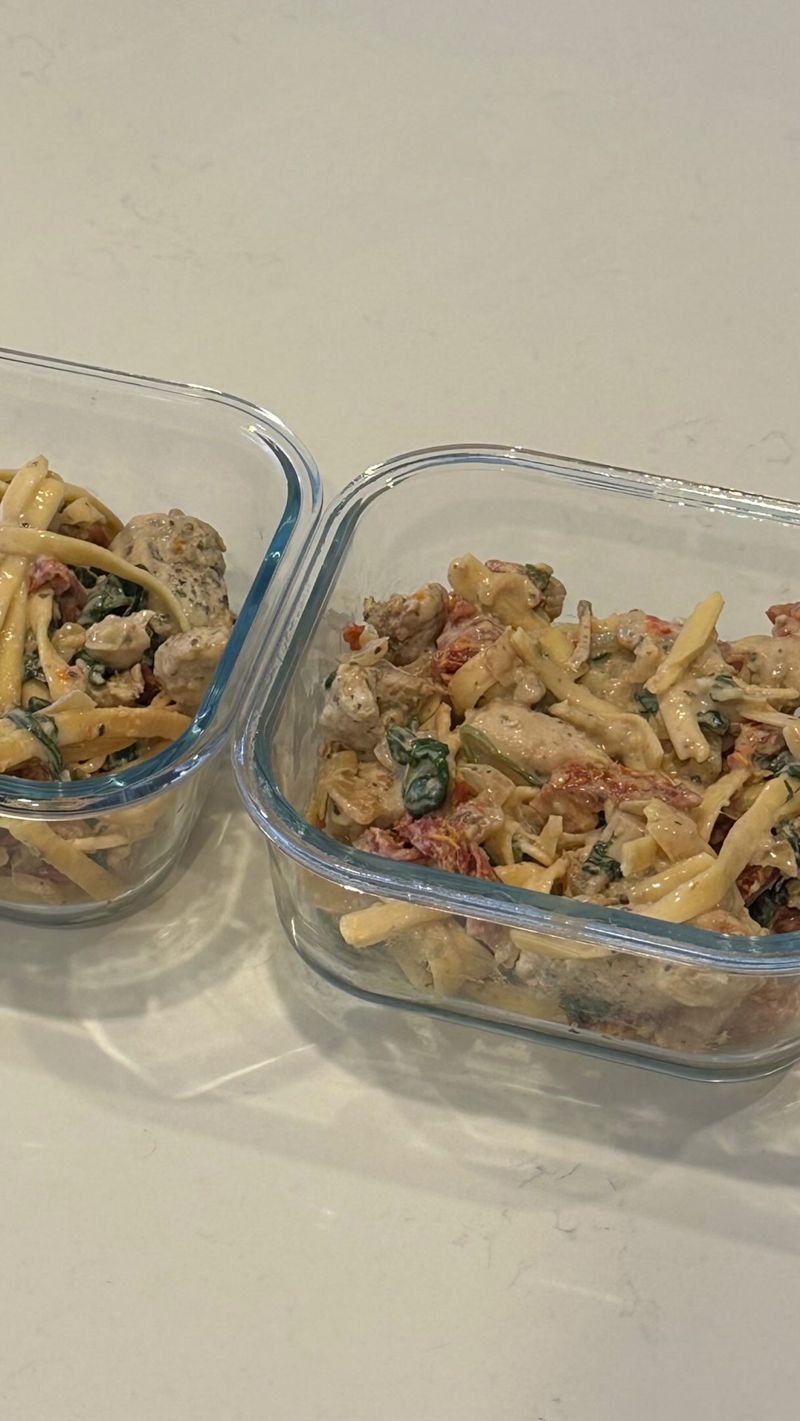
Leftover cream pasta can firm up into a solid block overnight, but it bounces back with a little care. Move leftovers into shallow, airtight containers and refrigerate them within 2 hours of cooking, as the USDA advises.
Stored that way, the pasta keeps for 3 to 4 days in the refrigerator. Label the container with the date so you're not guessing later in the week.
The stovetop gives you the most control when reheating. Put a portion in a skillet over low to medium-low heat and add a splash of milk, cream, broth, or water.
Stir gently as it heats, adding more liquid if the sauce looks tight. Heat leftovers until they reach 165°F (74°C), which is the USDA guideline for reheated food.
The microwave works in a pinch too. Add a splash of liquid, cover loosely, and heat in short bursts, stirring between each one.
Freezing is possible, but cream sauces often separate or turn grainy after thawing. If you freeze it, thaw it overnight in the fridge and stir in extra liquid while reheating to smooth it out.
For better texture, plan to eat leftovers from the fridge rather than the freezer. A splash of broth makes a handy stand-in for pasta water.
Easy Swaps for the Chicken, Pasta, Greens, and Cream
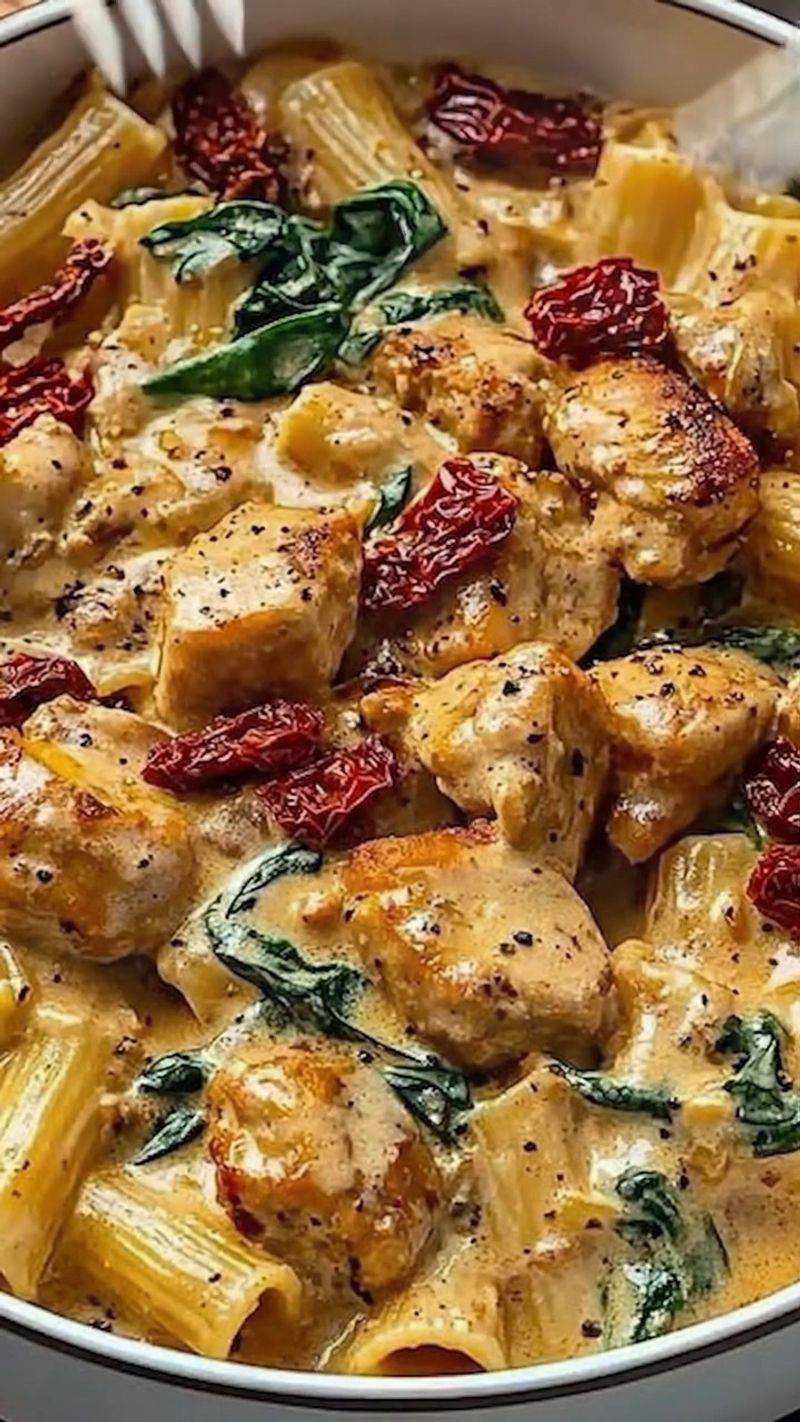
Pantry missing something? A few simple swaps keep dinner on track, though each one changes the dish a little.
- Chicken thighs: Boneless, skinless thighs have more fat, so they stay juicy and are more forgiving. Cut them into bite-size pieces and cook until they reach 165°F, which may take a few extra minutes.
- Other pasta shapes: Rotini, cavatappi, or fettuccine hold creamy sauce well. Follow the package time for al dente, since cooking times vary by shape.
- Half-and-half: It can replace heavy cream for a less rich sauce. It's thinner and more likely to curdle, so keep the heat low and simmer gently.
- Kale: Remove the tough stems and chop the leaves small. Kale is sturdier than spinach, so give it a few extra minutes to soften in the sauce.
- Mushrooms or artichokes: Sauté sliced mushrooms after the chicken until browned, or stir in chopped, drained marinated artichoke hearts with the sun-dried tomatoes.
Try one swap at a time so you can tell what changed. That way, you'll know which version earns a repeat spot on your weekly menu.
Whatever you change, keep the Parmesan step on low heat. That rule protects the sauce no matter which cream or add-ins you choose.
Why Cream Sauce Turns Grainy and How to Keep It Smooth
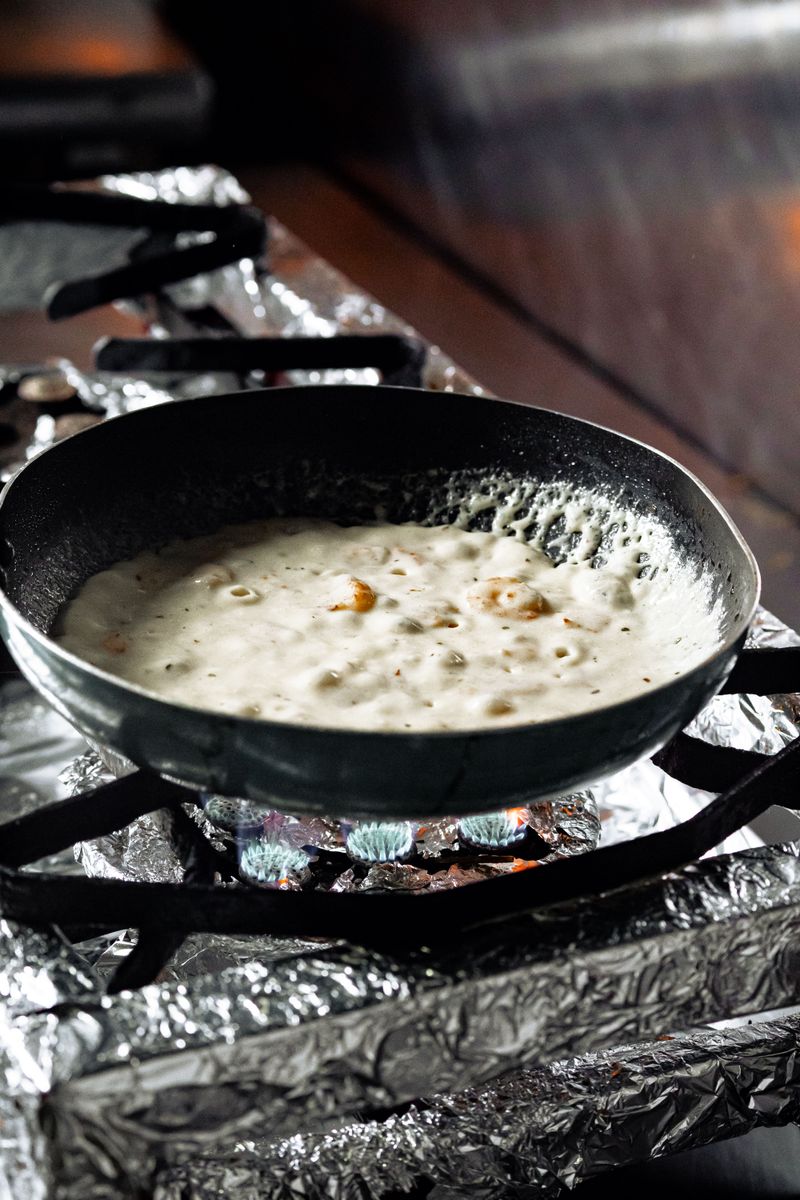
Small hiccups happen with cream sauces, and most of them are fixable right in the skillet. Use this quick guide to spot the likely cause and try a fix.
- Sauce too thick: The pasta likely absorbed liquid as it sat. Stir in reserved pasta water, broth, or a splash of cream a tablespoon or two at a time.
- Sauce too thin: It may not have simmered long enough. Let it bubble gently over low heat for a few more minutes, stirring often, and remember it thickens as it cools slightly.
- Grainy or separated sauce: High heat or pre-shredded cheese is usually the cause. Take the pan off the heat and whisk in a small splash of reserved pasta water or cream.
- Dry chicken: It was probably cooked well past 165°F. Check it sooner next time, and rest it before adding it back so it holds its juices.
- Bland flavor: Salt is often the missing piece. Add a pinch at a time, or stir in a little more Parmesan or a spoonful of sun-dried tomato oil.
An instant-read thermometer solves more problems than you might expect. It takes the guesswork out of chicken and helps you skip dry, overcooked bites.





Leave a Reply